 listicle
Premium Glass Cabinets for Small Shops: 2026 Guide
Table of Contents
- Why Premium Glass Cabinets Matter for Small Shops
- Small Shop Display Cabinets: A Quick Comparison
- Glass Display Cabinets with Locks: Security for Valuable Stock
- Glass Display Cabinets with LED Lights: Make Products Stand Out
- Countertop Glass Display Cabinets: Making the Most of Every Surface
- Space Planning and Measuring for a Compact Shop
- Conclusion: Choosing the Right Premium Glass Cabinets
- Frequently Asked Questions
Last Updated: October 5, 2026
Why Premium Glass Cabinets Matter for Small Shops
A glass display cabinet is a glazed storage and presentation unit built to show stock while protecting it from dust, handling and casual theft.
This guide from Display Cabinets UK covers the four cabinet types worth shortlisting, how to measure a compact footprint before you order, and where security and lighting change the buying decision.
Most shop owners underestimate how much a cabinet contributes to product presentation. In practice, a well-lit glazed unit at eye level turns browsing into buying because customers can see the item clearly without asking for help.
The premium end of the market exists for a reason. Cheaper flatpacks often arrive with thin glass, rattling frames and doors that never quite align.
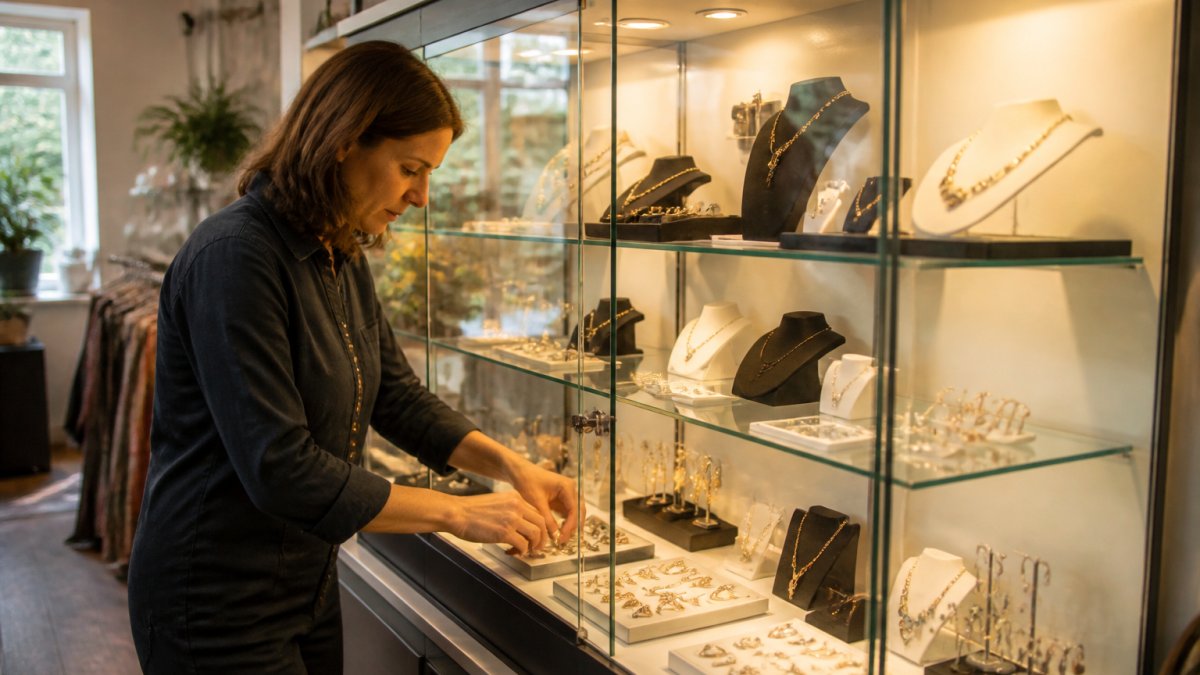
Small Shop Display Cabinets: A Quick Comparison
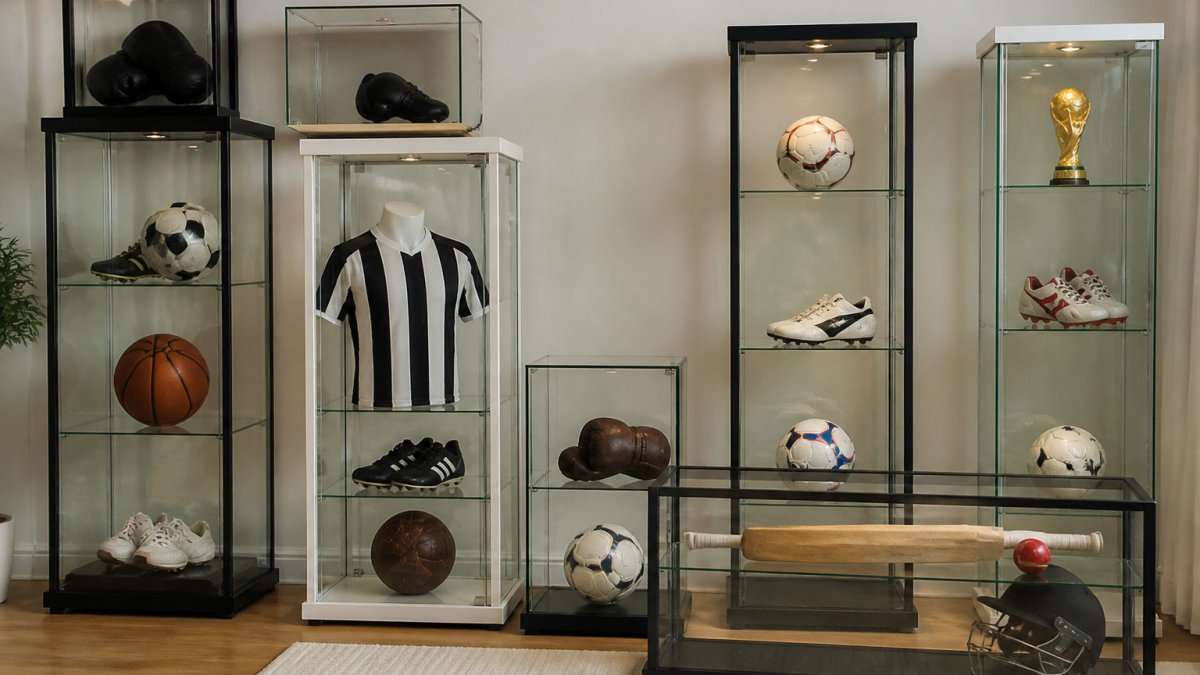
Small shop display cabinets fall into four practical types, and the right one depends on your floor space, the value of your stock and whether you need storage underneath.
| Cabinet Type | Typical Footprint | Typical Display Area | Storage Below | Indicative Price Band (excl. VAT) | Best For |
|---|---|---|---|---|---|
| Freestanding floor cabinet | 900-1200mm wide x 400-500mm deep | 4-6 shelves, full height | Drawer or cupboard | £400-£1,500 | Shops with a spare corner and a full range to show |
| Countertop display | 400-600mm wide x 300-400mm deep | 2-3 tiers | None | £120-£450 | Jewellery, watches, small collectibles |
| Wall-mounted display | 600-1000mm wide x 150-250mm deep | 3-5 shelves | None (or slim cupboard) | £250-£900 | Compact shops with narrow aisles |
| Display counter | Full counter length, 600mm deep | 1-2 tiers plus counter top | Cupboard under counter | £700-£2,500 | Tills and point-of-sale areas |
Freestanding cabinets give you the most display area and usually include a storage cupboard or drawer at the base. Countertop units suit high-value, low-volume stock. Wall-mounted cases solve the problem of a shop with almost no spare floor, though you need a solid wall and safe fixing heights.
The trade-off is always between display area and walking room. A cabinet that blocks a customer sightline costs you more in lost sales than it gains in storage.
What drives the price up or down
Four factors move the price band more than anything else:
- Glass specification. Tempered safety glass costs more than annealed glass but resists impact and breaks into blunt fragments rather than shards. Toughened glass is the sensible minimum for any cabinet holding valuable stock.
- Frame material. Aluminium frames are lighter and cheaper; solid wood or powder-coated steel frames cost more but suit heritage or premium interiors.
- Lighting. Integrated LED strips, shelf-level lighting and dimmable drivers add cost. A basic top-mounted strip is the cheapest option; per-shelf LED adds more.
- Locking and access. A single cam lock is standard; multi-point locking bars, rear sliding doors and removable display trays push the price toward the top of the band.
Total cost of ownership
The sticker price is not the whole cost. Budget for delivery (many suppliers charge for two-person delivery on full-height units), assembly or a build service if you choose flatpack, and any electrical work if you want lighting hard-wired rather than plug-in.
Glass Display Cabinets with Locks: Security for Valuable Stock
Glass display cabinets with locks are the sensible default for any shop displaying items worth more than the cabinet itself. A lockable display cabinet with a proper cam lock or multi-point locking bar deters opportunistic theft and keeps staff honest about stock control.
The lock types you will actually see
- Cam lock. A small cylinder lock that turns a metal cam behind the frame. Cheap, common, and adequate for low-value stock. Easy to defeat with a screwdriver if the frame is thin.
- Multi-point locking bar. A single key operates rods that engage the frame at two or more points. Much harder to force than a cam lock and the sensible choice for jewellery or electronics.
- Ratchet or push lock. Common on countertop cases; the lid or door locks as it closes. Convenient for staff but check the latch engages metal, not glass.
- Central locking. One key locks several cabinets or a whole display run. Useful where staff need to open and close multiple units at once.
Glass and frame: where cheap cabinets fail
Security is where budget cabinets fail hardest. A thin annealed pane and a flimsy lock offer little resistance, and a determined break-in will defeat them in seconds. What you want is tempered (toughened) safety glass that resists impact and breaks into blunt fragments rather than shards, a lock that engages the metal frame rather than the glass edge, and hinges that cannot be lifted off their pins.
Layering security in a small shop
Treat the cabinet as one layer of a wider security approach rather than the whole answer:
- Position the cabinet within sight of the till so staff have a natural line of sight.
- Keep the most valuable stock in the least accessible section, behind the counter, or on a shelf that requires the door to be fully open.
- Lock up overnight and, where possible, move high-value items to a safe rather than leaving them in the cabinet.
- Record serial numbers and photograph stock so a theft claim is straightforward.
- Consider an alarm contact on the cabinet door if you display genuinely high-value items.
For general guidance on protecting a business premises, the official guidance on business crime prevention from the Metropolitan Police is worth reading before you finalise your shop layout.
Glass Display Cabinets with LED Lights: Make Products Stand Out
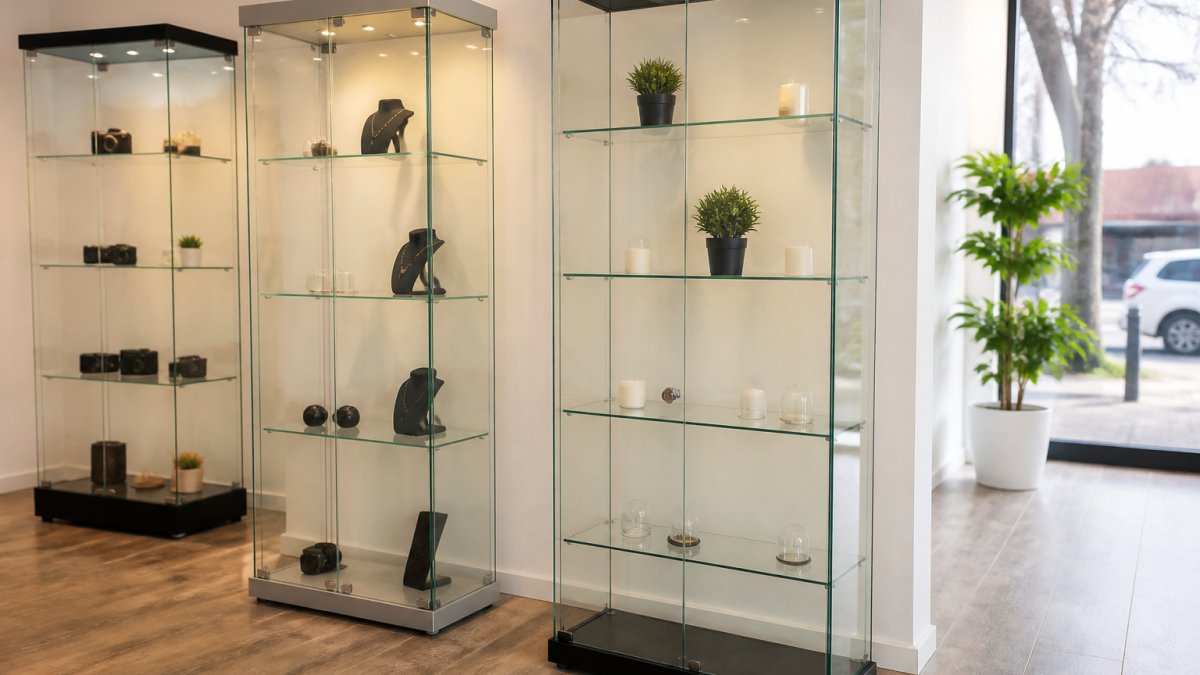
Glass display cabinets with LED lights change how customers read your stock. LED strips run cool, use little power and can be positioned along the top or under each shelf to wash light across the products rather than into the customer's eyes.
Check out →
Lighting is the single most underrated upgrade in retail display. A cabinet without lighting looks flat and grey, especially in a shop with dim overhead bulbs. Add LED lighting and the same stock suddenly looks brighter, cleaner and more valuable.
Two practical points matter here. First, choose a warm-to-neutral colour temperature (roughly 3000K to 4000K) so metals and gemstones look natural rather than blue. Second, avoid pointing lights directly at glass at a shallow angle, which creates glare and hides the product behind reflections. Angled strips or recessed fittings solve this.
If your cabinet sits near a window, expect some daylight glare regardless. Position it so the sun is behind the customer, not behind the stock.
Countertop Glass Display Cabinets: Making the Most of Every Surface
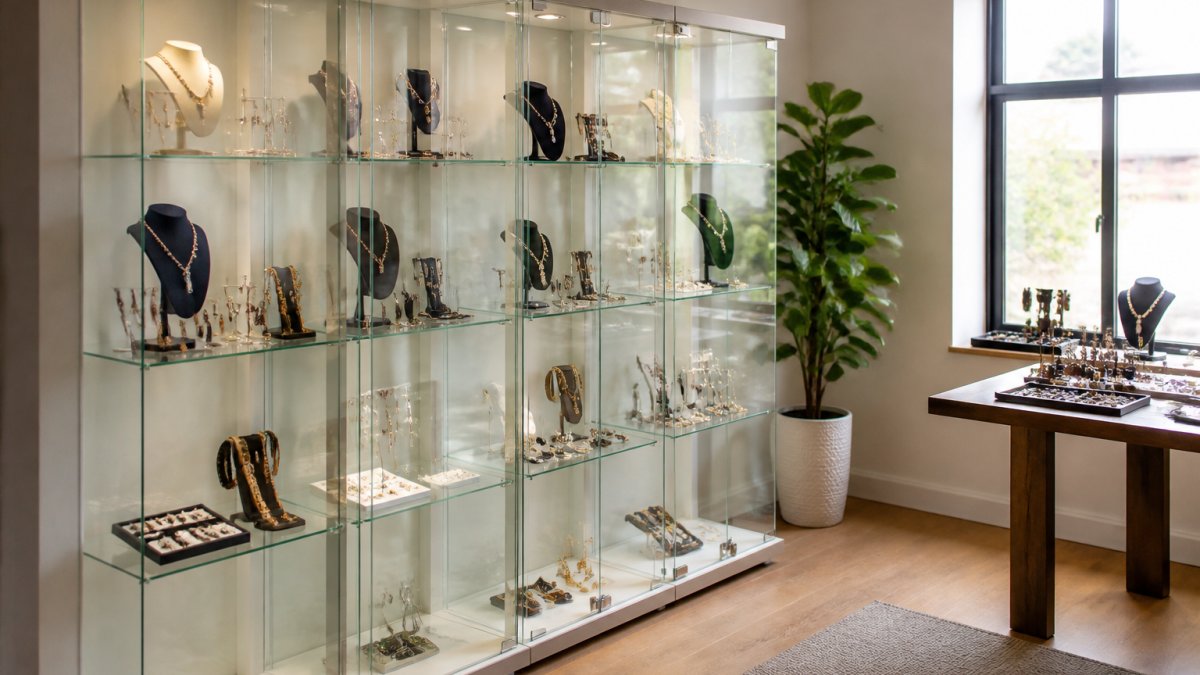
Countertop glass display cabinets are the answer for shops with no spare floor at all. They sit directly on an existing counter or till point and turn dead surface area into a secure, glazed display for small, high-value items.
The appeal is obvious: no footprint, no installation, and a clear view of the stock from the customer's side of the counter. Jewellers, watch dealers and collectible sellers use them constantly because the items are small, valuable and easy to present at eye level.
The limitation is capacity. A countertop unit holds a curated selection, not a full range. Use it for your best pieces and rotate stock regularly so the display stays fresh. You also need to think about access: a countertop case with a rear sliding door is easier for staff to open than one that lifts from the front.
Space Planning and Measuring for a Compact Shop
Space planning starts with three measurements: the wall run available, the walking width you need to keep, and the door-swing clearance of any cabinet you are considering. Get those three right and the rest of the decision becomes straightforward.
Walk the shop with a tape measure and mark out the cabinet's footprint on the floor with masking tape. Then walk the route a customer would take. If you have to sidestep the tape, the cabinet is too big for that spot. Most small shops need to keep a clear walking width in the main aisle.
Cabinet dimensions to check before ordering:
- Overall height: full-height units give more display but can dominate a small room
- Width and depth: depth of 400mm to 500mm suits most freestanding cases
- Shelf count and adjustability: adjustable shelves let you change the layout as stock changes
- Door-swing clearance: a hinged door needs room to open; sliding doors do not
- Storage below: drawers and cupboards add usable space without extra footprint
Wall-mounted display cases are the best answer when floor space is genuinely tight, as long as the wall can take the load and you fix the cabinet at a safe height.
Conclusion: Choosing the Right Premium Glass Cabinets
Choosing premium glass cabinets for small shops comes down to matching the cabinet type to your space, your stock value and your security needs. Get those three aligned and the display does the selling for you.
At Display Cabinets UK, we supply premium glass display cabinets with locks and lights, available as flatpack with a build service if you would rather not assemble it yourself, plus free nationwide delivery. If you are weighing up lockable units for valuable stock, LED-lit cases for presentation, or a compact countertop display, we can help you match the cabinet to your shop. Check out our range and get the display your stock deserves.
Frequently Asked Questions
What type of glass display cabinet is best for a small shop?
The best type depends on your stock and floor space. Countertop glass display cabinets suit small, high-value items like jewellery and work well on existing counters. Freestanding cabinets with adjustable shelves offer more capacity and flexibility. Wall-mounted options free up floor space entirely. For most small shops, a combination of a countertop unit for impulse items and a freestanding cabinet for larger stock works well. Prioritise tempered glass for safety and durability.
How do I choose the right size display cabinet for a small retail space?
Measure your available floor space first, including door-swing clearance and customer walkways. A compact footprint suits most small shops without blocking sightlines. Check that shelf heights accommodate your tallest products. Adjustable shelves give you flexibility as stock changes. If floor space is tight, wall-mounted or countertop glass display cabinets preserve your shop-floor space while still providing secure, visible product presentation.
Are glass display cabinets suitable for valuable products?
Yes, provided the cabinet has a reliable locking mechanism and tempered glass. Glass display cabinets with locks deter opportunistic theft and keep high-value items secure during trading hours and overnight. Tempered glass resists impact far better than standard glass. For extra security, choose a cabinet with a reliable locking mechanism. Pair the cabinet with good lighting so staff have clear sightlines across the shop floor.
Do retail glass cabinets come with locks and lighting?
Many do, but not all. Glass display cabinets with locks and LED lights are available as combined units, which saves you from retrofitting lighting later. LED lights run cooler than halogen, use less energy, and last far longer. If you buy a cabinet without lighting, you can add LED strip kits yourself, though factory-fitted lighting usually looks neater. Always confirm lock type and light specification before ordering.
Is a flat-pack glass display cabinet difficult to assemble?
Assembly difficulty varies by design. Flat-pack cabinets with clear instructions and pre-drilled panels typically take one to two hours for two people. The main challenges are handling glass panels safely and aligning doors so they close smoothly. If you are short on time or want a flawless finish, a professional build service removes the risk of scratched glass or misaligned frames. Free nationwide delivery makes flat-pack a practical option for most small shops.
A note on what we can and cannot tell you here: we have deliberately avoided quoting prices, because cabinet costs vary with size, glass type, lighting and locking options. For current pricing and lead times, contact us directly and we will give you a straight answer for your specific shop.