 listicle
Best Glass Cabinets for Home Office: 5 Top Picks for 2026
Table of Contents
- Quick Comparison: Best Glass Cabinets for Home Office
- 1. Display Cabinets UK Premium Glass Display Cabinet: Best Overall
- 2. IKEA MILSBO Glass-Door Cabinet: Best Lockable Option
- 3. Vlsrka 65" Tall Storage Cabinet: Best for Small Offices
- 4. Ebern Designs Glass Display Cabinet: Best for Modern Interiors
- 5. IKEA DETOLF Glass-Door Cabinet: Best Budget Pick
- How to Choose a Lockable Glass Display Cabinet
- Glass Cabinet with Lights: What to Look For
- How to Style a Display Cabinet for a Professional Home Office
- Frequently Asked Questions
Last Updated: September 29, 2026
Quick Comparison: Best Glass Cabinets for Home Office
The best glass cabinets for home office use balance security, visibility, and build quality. Display Cabinets UK supplies premium glass display cabinets with high-security locking, integrated LED lighting, and an optional professional build service with free nationwide delivery. The alternatives below cover lockable, budget, and small-space needs.
| Cabinet | Best For | Lockable | Lighting | Assembly |
|---|---|---|---|---|
| Display Cabinets UK Premium | Best overall | Yes | Integrated LED | Flatpack or build service |
| IKEA MILSBO | Best lockable option | Yes | No | Self-assembly |
| Vlsrka 65" Tall | Best for small offices | No | Body sensor switch | Self-assembly |
| Ebern Designs | Best for modern interiors | No | No | Self-assembly |
| IKEA DETOLF | Best budget pick | No | No | Self-assembly |
1. Display Cabinets UK Premium Glass Display Cabinet: Best Overall
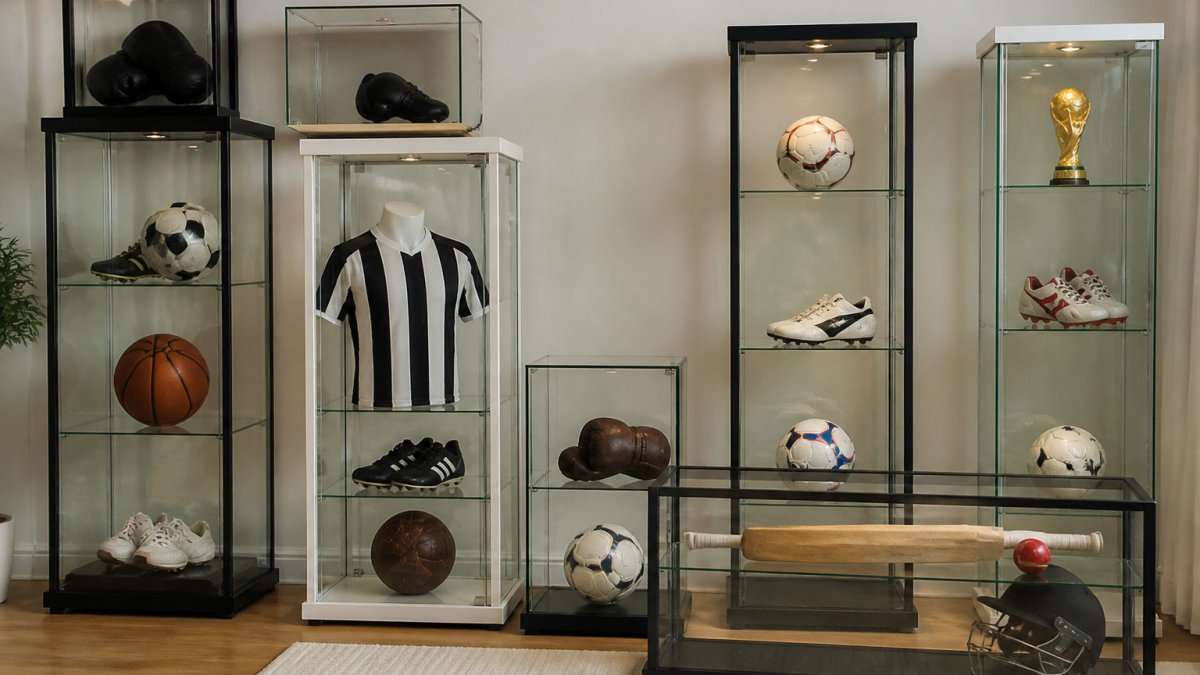
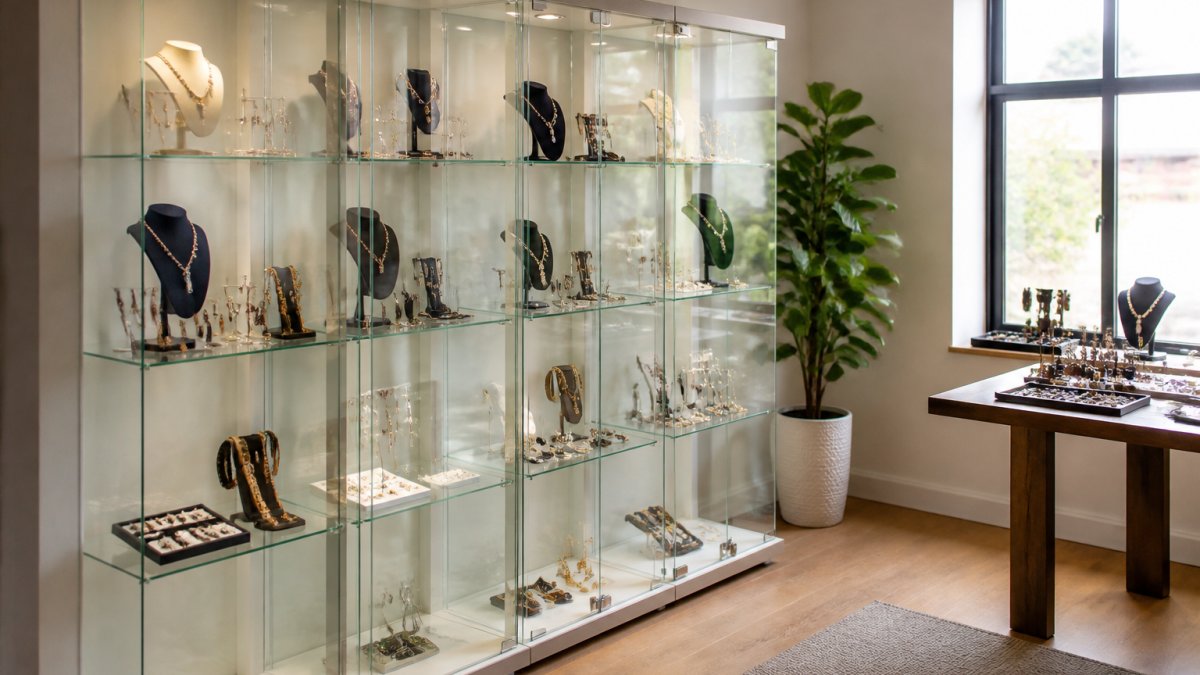
The Display Cabinets UK premium glass display cabinet is built for home offices and retail spaces where security and presentation both matter. It uses high-security locking mechanisms and integrated LED lighting, so high-value items stay protected and clearly visible without extra wiring work.
2. IKEA MILSBO Glass-Door Cabinet: Best Lockable Option
If you want a lockable glass display cabinet at a lower price, the IKEA MILSBO is the obvious pick. It offers lockable doors, adjustable shelving, and tempered glass construction for safety, all for around £179.
3. Vlsrka 65" Tall Storage Cabinet: Best for Small Offices
Small home offices need vertical storage, and the Vlsrka 65" Tall Storage Cabinet delivers it. Five tiers of adjustable shelving let you mix display and storage, and the compact footprint fits tight corners.
4. Ebern Designs Glass Display Cabinet: Best for Modern Interiors
For contemporary home offices, the Ebern Designs Glass Display Cabinet is the most design-led option here. Its ultra-modern aesthetic and multiple finish options let it double as a room divider in open-plan spaces.
5. IKEA DETOLF Glass-Door Cabinet: Best Budget Pick
The IKEA DETOLF remains the cheapest credible glass cabinet at around £70. Full-height glass panels give 360-degree visibility, and its slim footprint maximises vertical space in a tight office corner.
How to Choose a Lockable Glass Display Cabinet
A lockable glass display cabinet is a cabinet with a built-in locking mechanism that secures the doors against unauthorised access. Choosing one comes down to four checks: lock quality, glass type, weight capacity, and assembly, plus, in a home office, where you actually put it.
Lock types and what they stop
Not all locks offer the same protection. Match the lock to the value of what you are storing and who has access to the room.
- Cam lock (keyed), the common cabinet lock found on the IKEA MILSBO and similar flatpacks. It deters casual access and keeps children or visitors out, but the cylinder is small and the strike plate is usually fixed into particleboard. Fine for awards, documents and low-value collectibles.
- Multi-point locking, bolts at two or three points along the door edge. Noticeably harder to force than a single cam lock and the better choice if the cabinet holds anything you would insure.
- Barrel or disc-tumbler locks, harder to pick than a standard pin tumbler. Often found on higher-spec display cabinets and worth asking about if security is the priority.
- Glass-door locks with a hasp, an external hasp and padlock is the least elegant option but the most obvious deterrent. Rarely appropriate in a home office where the cabinet is on display.
Glass type and safety
Check that the glass is tempered or safety glass, not standard annealed glass. Tempered glass is heat-treated so that if it breaks, it shatters into small blunt fragments rather than long sharp shards. This matters in a home office where the cabinet may sit near a desk, a doorway or a walkway. Toughened glass to a recognised safety standard is the norm on reputable cabinets; if a listing does not state the glass type, treat that as a warning sign.
Ergonomic placement in a home office
This is the step most buying guides skip, and it is the one that decides whether a glass cabinet helps or hinders your working day.
- Avoid placing the cabinet directly behind your monitor or in your eyeline. A lit glass cabinet is a reflective surface. Position it so that neither the cabinet nor its contents sit in your field of view while you work.
- Watch for glare. If the cabinet faces a window, sunlight will bounce off the glass and can wash out your screen. A side wall, angled away from the window, is usually the safest position.
- Keep it out of your video-call background unless the contents are something you want on display. A tidy, lit cabinet reads well; a cluttered one does not.
- Respect door swing. A hinged glass door needs roughly its own width plus clearance to open fully. In a small office, a sliding-door cabinet can be the difference between usable and unusable.
- Check the floor. A tall glass cabinet is top-heavy when loaded. On carpet, use the anti-tipping hardware supplied; on a hard floor, check the cabinet sits level before loading the upper shelves.
Pre-purchase checklist
- Confirm the lock type (cam, multi-point, or barrel) and whether it meets your security needs
- Check the glass is tempered or safety glass, not standard annealed glass
- Verify the load-bearing capacity per shelf for your heaviest items
- Measure your space, including door swing for hinged doors or clearance for sliding doors
- Decide between freestanding and wall-mounted, based on floor space and floor type
- Confirm whether assembly is included or self-assembly
- Plan the position so the cabinet is not in your eyeline or facing a window
Glass Cabinet with Lights: What to Look For
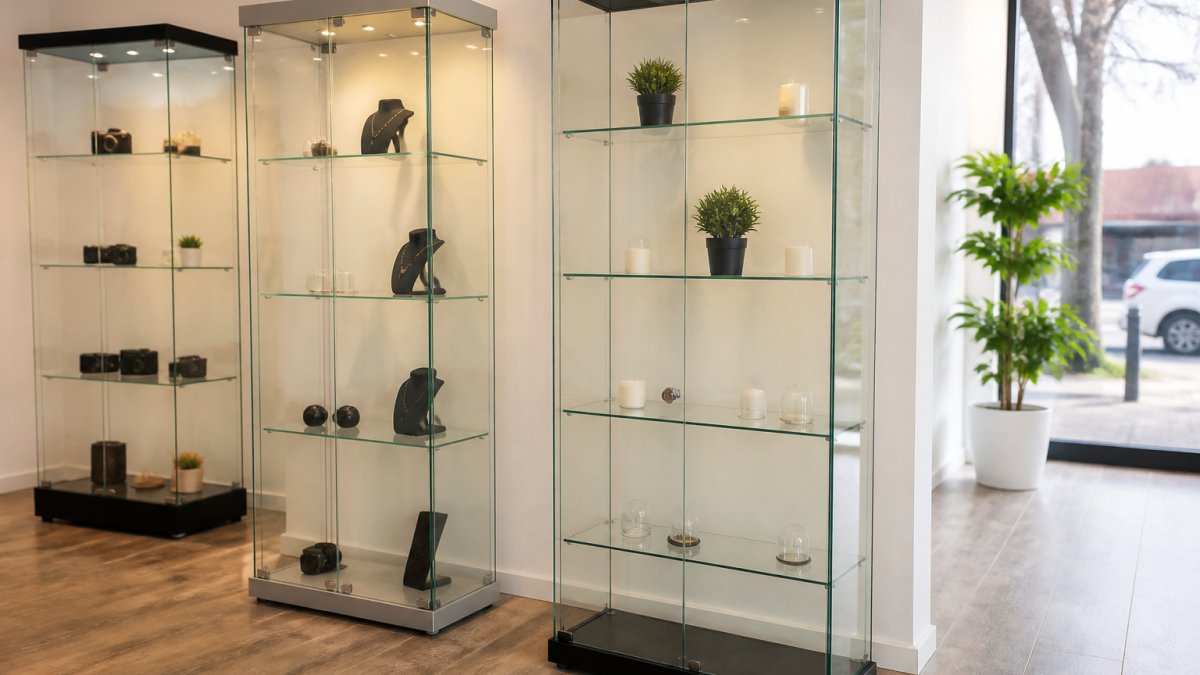
A glass cabinet with lights needs the right lighting type, a clean way to power it, and a placement that does not fight your workspace. LED lighting runs cool, uses little power, and will not damage heat-sensitive items, which makes it the standard choice for display cabinets. Look for integrated LED strips rather than stick-on options, which sag and fail over time.
Check out →
Lighting types compared
- Integrated LED strips, factory-fitted, hidden behind shelf edges or door frames, usually mains-powered with a single plug. Cleanest look, hardest to retrofit.
- Puck lights, small round fittings you screw or stick under shelves. Easier to add later, but each puck needs its own cable or a daisy-chain connector.
- Strip lighting on a sensor, as found on the Vlsrka cabinet above, a body sensor switch triggers the light when you approach. Useful in a home office where you do not want a cabinet glowing all day.
- Display-case spotlights, directional fittings that highlight a single shelf. Best for awards or a small collection, less useful for general storage.
Colour temperature matters more than most buyers expect. A 4000K-5000K neutral white reads as clean and professional in a home office and flatters certificates, awards and tech equipment. Warm 2700K-3000K suits wood-heavy traditional interiors but can make white paperwork look yellow. If the cabinet sits behind you on video calls, neutral white is the safer choice.
Cable management for an LED-lit cabinet
This is where most buying guides stop, and where a home office differs from a living room. A lit cabinet in a workspace has to hide its wiring without blocking sockets you need for your desk.
A practical approach:
- Choose a cabinet with a pre-drilled grommet or rear cable port. If it has one, the run stays invisible. If it does not, a 25mm hole saw and a rubber grommet solve it in minutes.
- Route the power down the back of the cabinet, not across the floor. Adhesive cable trunking in a matching colour keeps the run tidy where it meets the wall.
- Use a single cable run to one accessible switched socket. Avoid daisy-chaining multiple extension leads, which is both untidy and a trip hazard.
- Consider a smart plug or inline switch so the cabinet lighting is not permanently on. This also lets you put the cabinet light on the same schedule as your desk lamp.
- Leave a service loop of around 30cm behind the cabinet so you can pull it forward for cleaning without unplugging anything.
Weight capacity for professional equipment
- A stack of ten hardback reference books can exceed 10kg
- A desktop laser printer typically sits between 8kg and 15kg
- Boxed archive files add up quickly, a full lever-arch file is around 1.5kg
For a fully lit, lockable setup with no assembly hassle, Display Cabinets UK supplies cabinets with both lighting and locks built in.
How to Style a Display Cabinet for a Professional Home Office
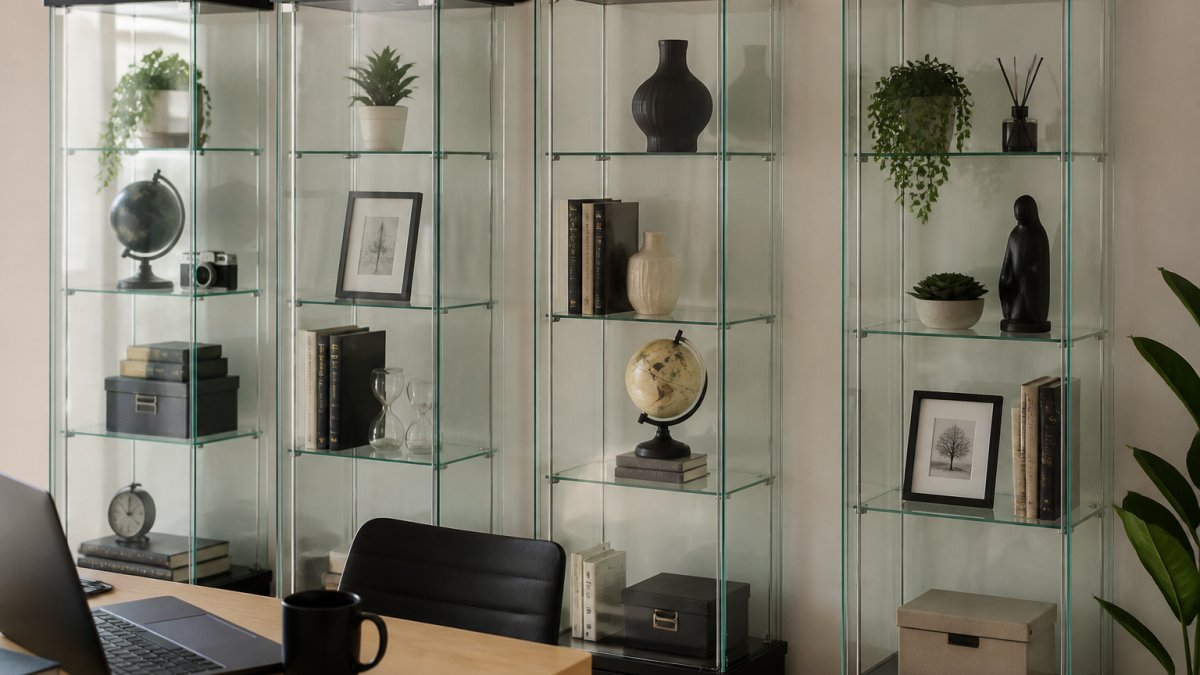
Styling a display cabinet for a home office means grouping items by purpose, leaving visible space between objects, and letting the lighting do the work. A cluttered cabinet reads as storage; a curated one reads as a statement.
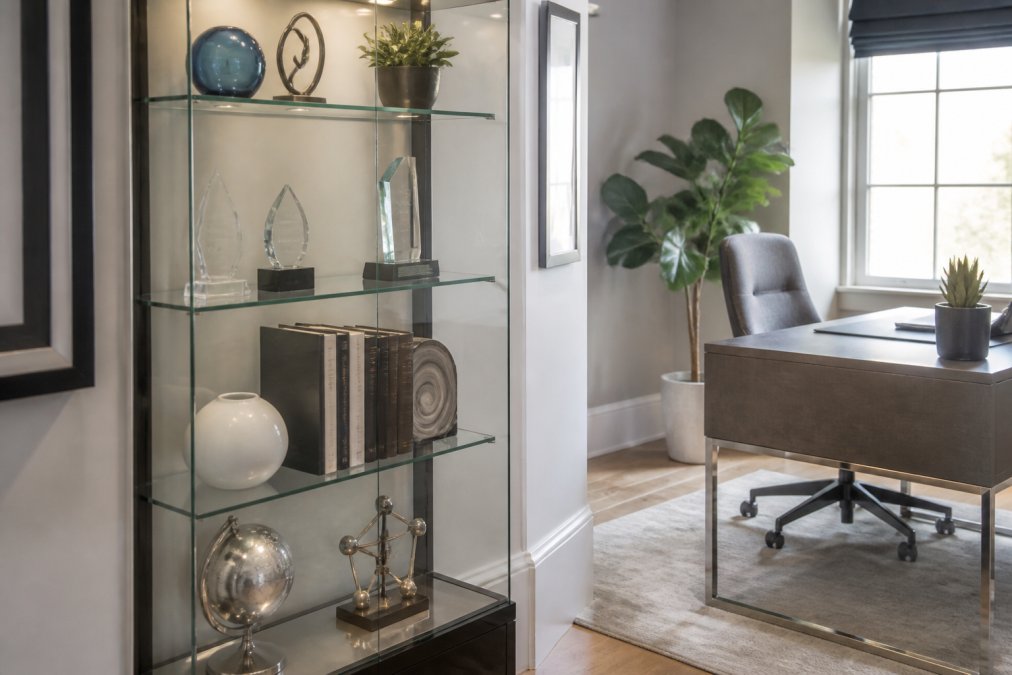
- Group awards or certifications together on one shelf
- Keep collectibles to a single themed shelf
- Leave at least a third of each shelf empty
- Match shelf height to item height using adjustable shelving
Frequently Asked Questions
What type of glass is best for a home office display cabinet?
Tempered glass is the standard for home office cabinets because it is treated to resist breaking and shatters into small, blunt pieces if it does. This matters if you are storing heavy items like awards or professional equipment. Safety glass is also required for furniture in many settings. Check that the cabinet specifies tempered or safety glass, not standard annealed glass, before you buy.
Are glass cabinets safe for home offices with children?
Yes, provided you choose tempered glass and use the anti-tipping hardware supplied with the cabinet. Tempered glass is far more resistant to impact than standard glass, and wall-anchoring kits prevent the unit from toppling if a child climbs on it. Freestanding cabinets without wall fixings are the main risk. Always fit the anti-tip strap, especially in homes with young children.
How do I secure a lockable glass display cabinet against break-ins?
A lockable glass display cabinet deters opportunistic theft, but the lock's quality varies. Look for a cam lock or cylinder lock rather than a simple magnetic catch. For high-value items, consider a cabinet with a steel or metal frame, as glass alone offers limited forced-entry resistance. If you are displaying items in a retail setting, check whether the locking mechanism meets your insurer's requirements.
What are the benefits of a glass cabinet with lights?
Integrated LED lighting makes displayed items visible without relying on overhead room lights, which is useful in a home office where ceiling lights may cast shadows. LED strips also run cool, so they will not damage heat-sensitive collectibles. Look for cabinets with built-in cable management so the wiring stays tidy. Some models include sensor switches that turn the lights on when the door opens.
How do I style a display cabinet for a professional look?
Limit the number of items to avoid clutter, group objects in odd numbers and vary heights across shelves. Leave some empty space so each piece stands out. Stick to a colour palette that matches your office, and use the cabinet's adjustable shelving to create visual rhythm. For a professional home office, avoid personal clutter and focus on awards, books or curated collectibles that reinforce your work identity.
A well-chosen glass cabinet protects what matters and lifts the look of your workspace, but the wrong one brings rattling doors and dust problems. Display Cabinets UK supplies premium glass display cabinets with high-security locks and integrated LED lighting, available as flatpack or with a professional build service, plus free nationwide delivery. Check out the range and get a cabinet built for how you actually use your office.