 ultimate-guide
Buying Glass Display Cases Online: A 2026 Guide
Table of Contents
- What to Look for When Buying Glass Display Cases Online
- Locking Glass Display Cabinets: Security Features That Matter
- Glass Display Cabinets with Lights: Illumination and Aesthetics
- Flatpack vs Pre-Built Display Cabinets: Which Is Right for You
- Materials, Finishes, and Design Styles
- Retail vs Domestic Display Solutions
- Delivery, Setup, and After-Sales Support
- Frequently Asked Questions
Last Updated: September 4, 2026
What to Look for When Buying Glass Display Cases Online
When you're shopping for glass display cases online, the decision goes beyond picking the first option you find. The right cabinet protects your valuables, complements your space, and lasts years without degradation. Display Cabinets UK and other suppliers offer countless configurations, but understanding what actually matters separates a smart purchase from a costly mistake.
The most common error is treating all glass display cases online as interchangeable. They're not. A cabinet that works brilliantly for retail jewellery will fail in a domestic living room. A flatpack unit that's simple to assemble might develop rattling or dust infiltration within months if the frame tolerances aren't tight. Before you click buy, consider three foundational elements: security, glass durability, and space fit.
Security and Locking Mechanisms
A lockable display cabinet protects against opportunistic theft and accidental damage. Not all locks offer the same resistance. Pin tumbler locks, commonly found on budget cabinets, can be compromised with basic tools. Better options include mortise locks with deadbolts or cam locks paired with reinforced hinges. If you're displaying high-value items, verify that the locking mechanism is integrated into the frame structure, not simply bolted to the door.
Load-bearing capacity determines whether your cabinet can safely hold what you plan to display. Glass shelves typically support 20-40 kg per shelf depending on thickness and span length (peer-reviewed research). Calculate the total weight of your collection, divide by the number of shelves, and add 25% as a safety margin. A cabinet rated for 100 kg total capacity that holds 120 kg will sag visibly within months and risks shelf collapse.
Glass Type and Durability
Tempered glass is the standard for display cabinets because it resists thermal stress and shatters into harmless granules rather than sharp shards. Standard annealed glass is cheaper but prone to breakage and creates dangerous splinters. For valuable collectibles, tempered glass is non-negotiable. Check whether the supplier specifies tempering in their product description.
Acrylic is a lightweight alternative to glass, offering similar clarity with greater impact resistance. It scratches more easily than glass and yellowing over time under UV exposure, but it's ideal for cabinets in high-traffic areas or homes with children. Glass display cases online typically offer both options at different price points, choose based on your environment and handling frequency.
Locking Glass Display Cabinets: Security Features That Matter
Locking glass display cabinets combine visibility with genuine protection. A cabinet that looks secure but isn't creates false confidence. The mechanism, frame construction, and door alignment all contribute to actual break-in resistance.
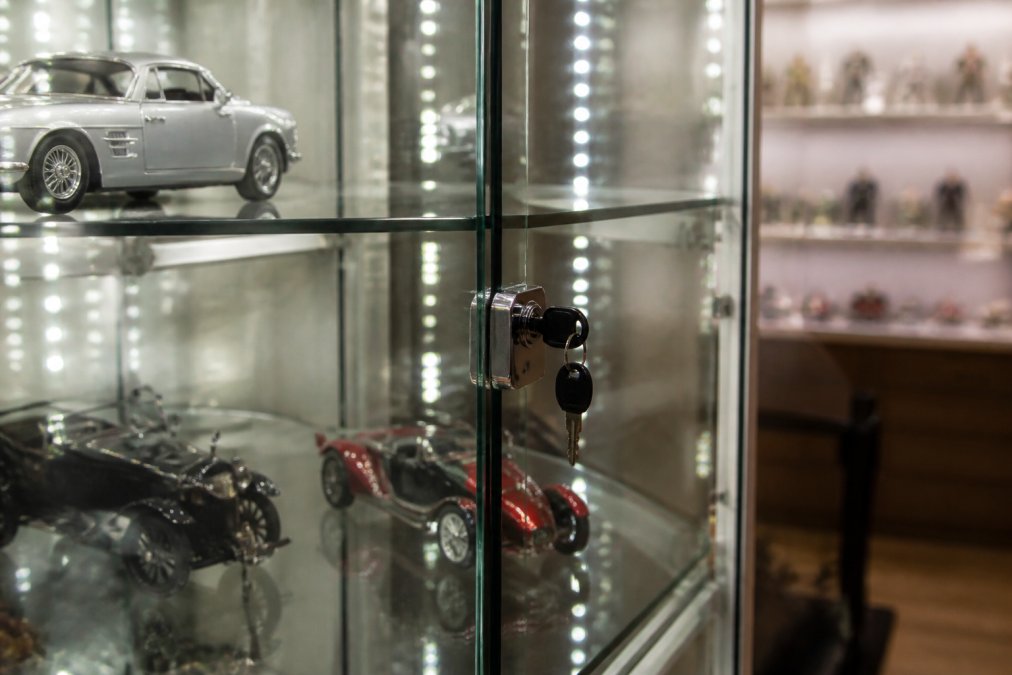
Lock Types and Break-In Resistance
Mortise locks sit within the door frame and engage a bolt into the cabinet body, making them significantly harder to force than surface-mounted alternatives. Cam locks are faster to operate but offer less resistance to determined intrusion. For retail environments or high-value collections, mortise locks paired with reinforced hinges are standard.
The door frame itself matters as much as the lock. Powder-coated steel frames with welded joints resist prying better than those with bolted corners. Check whether hinges are visible from outside the cabinet, exposed hinges can be removed if the pin is accessible. Quality locking glass display cabinets have concealed hinges or pins that cannot be removed from outside.
Load-Bearing Capacity and Safe Installation
Overloading a cabinet doesn't just risk breakage, it can cause the entire unit to tip or collapse. Most freestanding cabinets have a centre of gravity that assumes even weight distribution across shelves. Concentrate weight at the top, and the cabinet becomes unstable. Secure wall-mounted cabinets to wall studs using the provided brackets; freestanding units should sit on a level surface away from high-traffic areas.
Adjustable shelving allows you to optimise load distribution. If you're displaying a mix of lightweight and heavy items, spread weight across multiple shelves rather than stacking heavy pieces on one level. Installation instructions should specify maximum shelf load and total cabinet capacity. Ignore these figures at your own risk.
Glass Display Cabinets with Lights: Illumination and Aesthetics
Lighting transforms a display cabinet from functional storage into a focal point. Poor lighting makes even premium items look dull. The right illumination enhances colour rendering, draws attention to details, and creates ambience that suits your space.
LED vs Traditional Lighting
LED lighting has become the standard for glass display cabinets with lights because it generates minimal heat, runs cooler than halogen or incandescent bulbs, and lasts significantly longer. A traditional bulb might need replacement every 1,000 hours; LED units often run 25,000+ hours before dimming noticeably (energy.gov). Over a decade, this difference compounds into substantial savings on replacement costs and labour.
Heat matters more than most buyers realise. Incandescent bulbs warm the interior of a closed cabinet, which can affect temperature-sensitive collectibles like vinyl records or vintage photographs. LEDs produce negligible heat, making them safer for sensitive items. Halogen lights sit between the two but carry higher energy costs and burn-out risk.
Lighting Temperature and Colour Rendering
Colour temperature, measured in Kelvin (K), determines whether your display looks warm or cool. Warm white (2,700-3,000K) suits vintage or antique items, creating a nostalgic atmosphere. Neutral white (4,000-4,100K) is versatile for most collectibles and retail displays. Cool white (5,000-6,500K) emphasises detail and works well for jewellery or modern art.
Colour rendering index (CRI) measures how accurately light reproduces colours compared to natural daylight. High CRI (90+) reveals the true colour of items; lower CRI (70-80) can make colours appear muted or shifted. For fine jewellery or art glass, specify LED lights with CRI 90 or above. This specification is often listed in product details when buying glass display cases online.
Flatpack vs Pre-Built Display Cabinets: Which Is Right for You
The flatpack-versus-built decision hinges on assembly tolerance, time availability, and budget. Flatpack cabinets save money and delivery space but demand precision during assembly. Pre-built units arrive ready to position but cost more and require larger delivery vehicles.
Assembly Difficulty and Time Requirements
Flatpack cabinets typically take 2-4 hours to assemble, depending on complexity. Glass shelves must be carefully seated in grooves or supports to avoid binding. Doors need precise alignment so they close smoothly without rubbing. If tolerances are loose, you'll notice rattling when the cabinet is moved or vibration from nearby traffic.
Common assembly issues include misaligned door frames, shelves that don't sit flush, and glass-to-frame gaps that trap dust. These problems often stem from manufacturing tolerances that are slightly out of spec, not user error. Before assembling, verify that all components are included and inspect for damage. If a frame is slightly warped or a shelf has chips, contact the supplier before proceeding.
Cost Comparison and Build Service Options
Display Cabinets UK and similar suppliers increasingly offer build services, where professionals assemble your cabinet on-site. This option costs more than flatpack assembly but eliminates risk and guarantees proper alignment. Build services typically take 1-2 hours and include testing of locking mechanisms and shelf stability.
The cost difference between flatpack and built service varies by cabinet size and complexity. For simple units, the premium might be 15-25% above the flatpack price. For complex cabinets with multiple shelves and integrated lighting, build services often represent better value than struggling through assembly yourself, especially if you're unfamiliar with furniture assembly.
Materials, Finishes, and Design Styles
The frame and finish define how a cabinet looks and how long it lasts. Powder-coated steel offers durability and a clean aesthetic for retail environments. Anodised aluminium resists corrosion and works well in humid spaces. Hardwood frames suit traditional interiors but require more maintenance.
Glass, Acrylic, and Frame Materials
Tempered glass is the premium choice for display cabinets. It's scratch-resistant, doesn't yellow, and provides unobstructed views from any angle. Acrylic costs less, resists impact better, and is lighter to handle during assembly, but it scratches easily and develops a cloudy appearance over time.
Frame materials determine structural rigidity and aesthetic appeal. Powder-coated steel is affordable and rigid, making it ideal for retail displays. Anodised aluminium offers a lighter appearance and better corrosion resistance, particularly in kitchens or bathrooms where humidity is high. Hardwood frames add warmth to domestic spaces but require occasional refinishing to maintain appearance.
Powder-Coated, Anodised, and Wood Finishes
Powder-coated finishes come in multiple colours and provide excellent durability against scratches and UV fading. The coating is applied electrostatically and cured in an oven, creating a uniform, hard surface. Powder coating typically lasts 5-10 years before showing visible wear.
Anodised aluminium develops a protective oxide layer that resists corrosion without additional coating. The process allows colour options and creates a brushed or glossy appearance depending on the anodising type. Anodised finishes don't peel or chip like paint and require minimal maintenance.
Wood finishes range from natural oil to polyurethane lacquer. Natural finishes highlight wood grain but need periodic resealing. Lacquered finishes are more durable but can show brush marks if applied poorly. Wood frames complement traditional décor but demand more care than metal alternatives.
Retail vs Domestic Display Solutions
Retail cabinets prioritise visibility and security in high-traffic environments. Domestic cabinets balance aesthetics with functionality. The distinction affects design choices, materials, and features.
Professional Appearance for Retail Environments
Retail display cabinets need to draw attention while protecting stock. Mirrored backs and integrated lighting are standard because they amplify the visual impact of displayed items. Jewellery counters often feature angled glass fronts to reduce glare and improve viewing angles for customers.
Retail cabinets are typically taller and narrower than domestic units, maximising vertical display space in limited floor areas. Lockable doors with smooth operation are essential because staff interact with the cabinet multiple times daily. Durability matters more than aesthetics because the cabinet will experience constant handling and occasional impact.
Home Display and Storage Integration
Domestic cabinets prioritise integration with existing décor. A cabinet in a living room should complement furniture and wall colours, not dominate the space. Smaller footprints suit residential layouts better than the large floor-standing units common in retail.
Home cabinets often combine display with storage, featuring closed base cabinets for items you don't want visible and glass-fronted upper sections for showcasing collectibles. This hybrid approach maximises space efficiency in homes where square footage is limited. Lighting should be warm and adjustable so you can control the ambience based on the time of day or occasion.
Delivery, Setup, and After-Sales Support
How a cabinet arrives and what happens if something goes wrong matter as much as the product itself. Reliable delivery and responsive support transform a good purchase into a positive experience.
Safe Packaging and Nationwide Delivery
Glass cabinets require careful packaging to prevent damage in transit. Quality suppliers use foam corner protectors, edge guards, and internal bracing to stabilise glass panels and frames. Track your order and inspect the cabinet immediately upon delivery. If damage is visible, document it with photos and contact the supplier before opening the packaging fully.
Nationwide delivery options vary. Some suppliers offer free delivery on orders above a certain value, while others charge based on distance or cabinet size. Delivery timeframes typically range from 5-14 business days depending on stock and location. Confirm delivery dates before purchasing, particularly if you're planning a renovation or retail launch around a specific deadline.
Build Service Timescales and Warranty
Build services usually schedule within 2-4 weeks of order placement, depending on demand. Urgent delivery is sometimes available at a premium. Confirm the build appointment at least 48 hours in advance and ensure someone is home to oversee the process.
Warranty terms vary by supplier. Standard warranties cover manufacturing defects for 1-2 years. Locking mechanisms and hinges sometimes carry separate warranties because they're wear items. Read the warranty terms carefully, some exclude damage from assembly errors or misuse. Display Cabinets UK offers nationwide delivery and build service options, with warranty coverage detailed at purchase.
Buying glass display cases online requires balancing security, aesthetics, and practicality. Tempered glass, quality locking mechanisms, and proper lighting transform a cabinet from mere storage into a showcase worthy of your collection. Whether you choose flatpack or built service depends on your comfort with assembly and budget constraints. Evaluate your space, calculate weight capacity, and select materials that suit your environment, domestic or retail. Display Cabinets UK supplies premium cabinets with locks and lights, available flatpack or with professional build service and free nationwide delivery. Get started with Display Cabinets UK and protect your valuables whilst enhancing your space with a cabinet built to last.
Frequently Asked Questions
What should I look for when buying glass display cases online?
Prioritise tempered glass for safety, lockable mechanisms if displaying high-value items, and adjustable shelving for flexibility. Check load-bearing capacity, lighting quality (LED is energy-efficient), and whether the cabinet suits your space, freestanding units work for most homes, whilst wall-mounted options save floor space. Verify delivery includes safe packaging and check assembly difficulty before ordering flatpack versions.
Are locking glass display cabinets worth the extra cost?
Yes, if you're displaying valuable collectibles, jewellery, or memorabilia. A quality lock with a reinforced frame and tempered glass significantly reduces theft risk and accidental damage. For domestic use, locking cabinets also provide peace of mind around children and pets. The cost difference is modest compared to the protection value, especially for items worth hundreds of pounds or more.
Is it better to buy a flatpack display cabinet or a pre-built unit?
Flatpack cabinets are cheaper and easier to transport, but assembly typically takes 2-4 hours and requires basic tools and confidence. Pre-built units arrive ready to use but cost more and may have longer lead times. Many suppliers offer a build service, a middle option that eliminates assembly hassle without the full cost of pre-built. Choose based on your budget, urgency, and comfort with DIY assembly.
What's the difference between tempered and float glass for display cases?
Tempered glass is heat-treated to be 4-5 times stronger than float glass and shatters into small, harmless pellets if broken, essential for safety around valuables and high-traffic areas. Float glass is cheaper but breaks into sharp shards and offers no security advantage. For display cabinets holding collectibles or jewellery, tempered glass is the safer, more professional choice and is standard in quality units.
How do I ensure my glass display cabinet is delivered safely?
Request secure packaging with corner protection and internal bracing, reputable suppliers include this as standard. Check that delivery includes signature on receipt and inspect the cabinet immediately upon arrival for damage before signing off. Ask about the supplier's damage guarantee and whether they offer returns or replacements. Many suppliers provide nationwide delivery with insurance, so confirm coverage before ordering.
What lighting temperature should I choose for displaying collectibles?
For most collectibles, 3000-4000K (warm to neutral white) is ideal, it enhances display aesthetics without causing fading. UV-resistant or low-UV LED lights are essential for protecting valuable items from sun damage over time. Avoid overly bright (5000K+) lighting, which can look harsh and may accelerate fading. LED lights generate less heat, reducing risk to delicate items like textiles or vintage glassware.
Can I fit a glass display cabinet in a small room or apartment?
Yes, wall-mounted cabinets and narrow, tall freestanding units are space-efficient options. Measure your available space first, including height, width, and depth. Consider vertical storage over horizontal to maximise display area without dominating the room. Modular and compact designs work well in small homes, and mirrored backs can create the illusion of more space whilst enhancing item visibility.
What's the typical assembly difficulty for flatpack display cabinets?
Most quality flatpack cabinets are rated moderate difficulty and take 2-4 hours with basic tools (screwdriver, spirit level, possibly a drill). Pre-drilled holes and clear instructions reduce errors. The most common issues are ensuring the cabinet is level and securing the back panel correctly. If you're unsure, ask the supplier about build service options or watch assembly videos before ordering to assess your comfort level.