 ultimate-guide
How to Choose Glass Cabinets: A 2026 Guide
Table of Contents
- Why Glass Cabinets Work in Modern and Traditional Interiors
- Choosing the Right Glass Type for Your Cabinet
- Choosing the Right Display Case Size for Your Space
- Glass Display Cabinet with Lights: What to Look For
- Locking Glass Display Cabinets: Security You Can Trust
- Flatpack vs Pre-Built Display Cabinets
- Styling, Cleaning and Maintaining Glass Cabinets
- Frequently Asked Questions
Last Updated: September 24, 2026
Why Glass Cabinets Work in Modern and Traditional Interiors
Glass cabinets solve a problem solid cabinetry cannot: they store and protect valuable items while keeping them visible. At Display Cabinets UK, we supply glass display cabinets with locks and lights, and customers most often choose glass over wood or laminate simply to see what they own without opening a door.
Choosing the Right Glass Type for Your Cabinet
The right glass type depends on three things: how much visibility you want, how much privacy you need, and how much cleaning you are prepared to do.
Clear, Frosted, Reeded and Fluted Glass Compared
Clear glass offers maximum transparency and works best when the contents are the display. It shows every smudge, so it suits low-traffic areas or cabinets you clean regularly.
| Glass Type | Visibility | Privacy | Cleaning Effort | Best For |
|---|---|---|---|---|
| Clear | Highest | None | High | Collectibles, glassware, retail display |
| Frosted | Low | High | Medium | Home offices, softer styling |
| Reeded | Partial | Medium | Medium | Hiding clutter, mid-century interiors |
| Fluted | Partial | Medium | Medium | Statement cabinetry, brass hardware |
Safety Glass and Thickness Standards
This is the part most buying guides skip, and it matters most. In the UK, the relevant specification for safety glass in furniture and cabinet doors is BS EN 12150, the harmonised European standard for thermally toughened soda lime silicate safety glass. If a supplier cannot tell you which standard their glass meets, that is your answer.
- 4mm toughened, light door panels and small display cases holding ornaments or jewellery.
- 6mm toughened, the standard for most domestic cabinet doors and shelves carrying glassware or books.
- 8mm toughened, heavy shelves, wide unsupported spans, or retail units where the cabinet is loaded and accessed constantly.
- 10mm and above, large-format or commercial display cases; usually specified by the manufacturer rather than chosen by the buyer.
A Note on Retrofitting Glass into Existing Cabinets
If you already own a solid-door cabinet and want to convert it, the process is more involved than most guides admit. You need to:
- Rout a rebate into the inside face of the door frame, deep enough to seat the glass and its retaining bead.
- Order the glass cut to size with a minimum 5mm clearance on each edge, because toughened glass cannot be cut or drilled after tempering, the holes and edge profile must be specified at the point of order.
- Fit a retaining bead or glazing clips to hold the pane without putting point loads on the glass.
- Allow for door weight. A glazed door is heavier than a solid one, so hinges may need upgrading to a 110-degree or 165-degree cabinet hinge rated for the new load.
Choosing the Right Display Case Size for Your Space
Choosing the right display case size starts with measuring the space, not the contents. Most buyers do this backwards: they pick a cabinet they like, then find it will not fit through a doorway, blocks a radiator, or crowds a walkway. Accounting for these physical constraints ensures that cabinet installation precision remains the primary factor in achieving a seamless integration within your home.
Start with three measurements:
- Available wall width in centimetres, allowing at least 5cm clearance on each side for door swing.
- Ceiling height at the intended position, minus any cornice or pendant light.
- Walkway depth in front of the cabinet. You need at least 70cm of clear floor to open doors comfortably.
Glass Display Cabinet with Lights: What to Look For
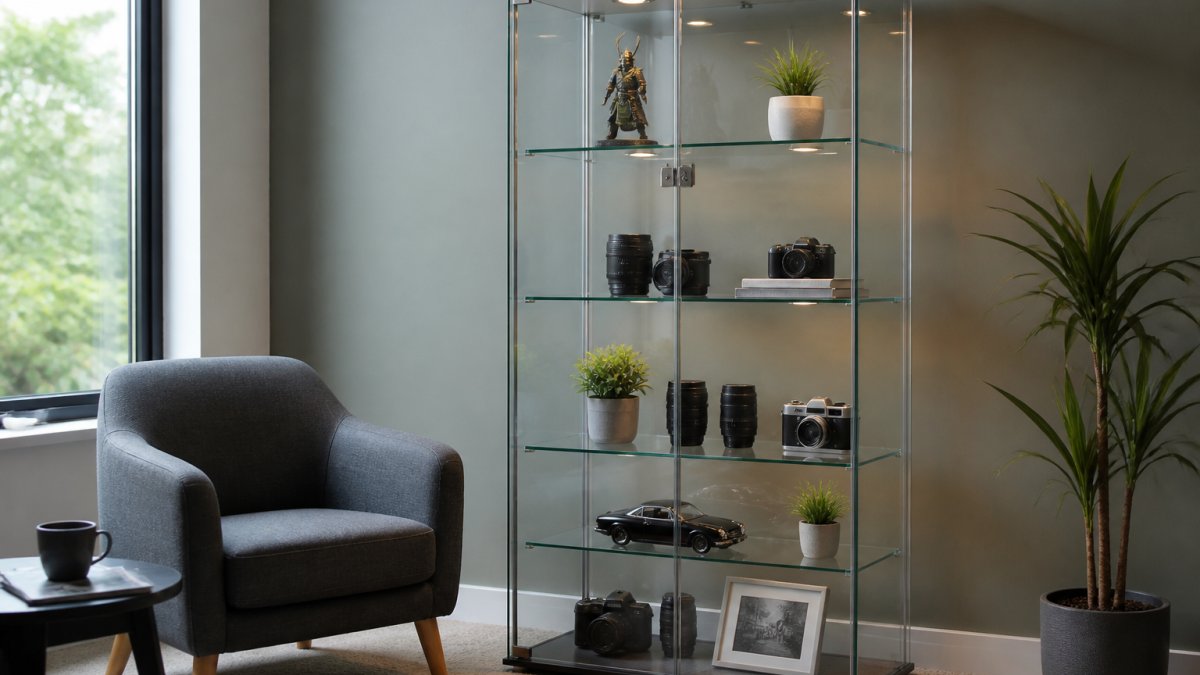
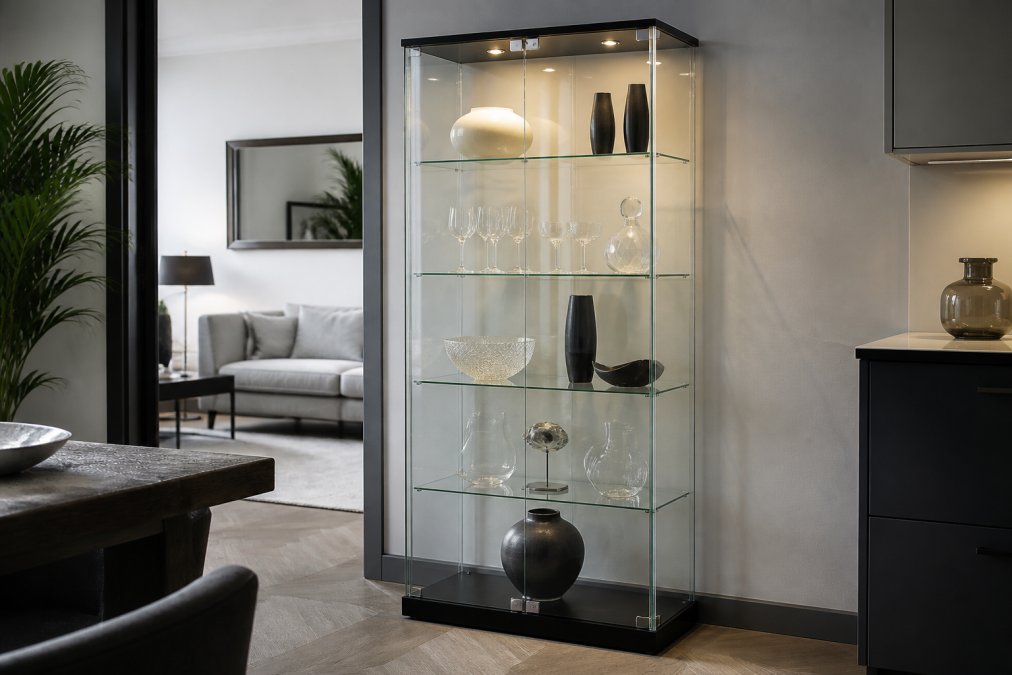
A glass display cabinet with lights does more than make contents visible, it turns the cabinet into a feature and adds warmth after dark. The wrong lighting creates glare, washes out colours and shows every fingerprint.
Look for these specifications:
- LED lighting, not halogen. LEDs run cool, so they do not heat contents or fade delicate items, and halogen draws roughly ten times the power for the same light output.
- Colour temperature between 2700K and 4000K. Warm white (2700K-3000K) suits traditional interiors and wood tones; neutral white (3500K-4000K) suits modern kitchens and retail. Above 4000K reads as clinical and makes timber look grey.
- Colour rendering (CRI) of 90 or above. This is the spec most buyers never see and the one that decides whether contents look right. A low-CRI strip makes reds look muddy and gold brassy; if a supplier cannot quote a CRI figure, assume it is below 80.
- Front- or side-mounted strips rather than top-down spots, which cast shadows and put the light source in the viewer's eye.
- Dimmable options if the cabinet sits in a living room or bedroom. A dimmable warm-white strip at 20% makes a display cabinet read as furniture rather than a shop fitting.
Cable Routing and Power
The thing most buyers miss is cable routing, the single most common reason a lit cabinet ends up unlit. Plan this before delivery, not after.
- Plug-in with a discreet cable channel is the simplest option, but you need a socket within reach. A cabinet in the middle of a wall with no nearby socket will need a spur adding, which is a job for a qualified electrician under Part P of the Building Regulations if it involves new fixed wiring.
- Rechargeable LED strips avoid the socket problem entirely and are now good enough for regular use. Expect to recharge every few weeks depending on brightness and hours of use.
- Hardwired with a fused spur is the cleanest result for a permanent installation, but it is a fixed electrical alteration and should be done by a registered electrician.
Smart Lighting and Switchable Glass
Motion-sensor and touch-dimming LED strips. A PIR sensor turns the light on when the door opens or someone approaches, and off after a set period, useful for retail units and hallways where a permanent glow is unwanted. Touch-dimming sets brightness without a wall switch.
Matching Lighting to the Room
A few practical rules that save rework:
Check out →
- One colour temperature per room. Mixing 2700K and 4000K cabinets in the same space looks like a mistake, because it is one.
- Light the contents, not the glass. Strips at the front edge of each shelf throw light back onto objects; strips at the back silhouette them.
- Use shelf-level lighting, not just top-down. A single strip at the top of a tall cabinet leaves bottom shelves in shadow. With more than three shelves, specify lighting at two levels or per shelf.
Locking Glass Display Cabinets: Security You Can Trust
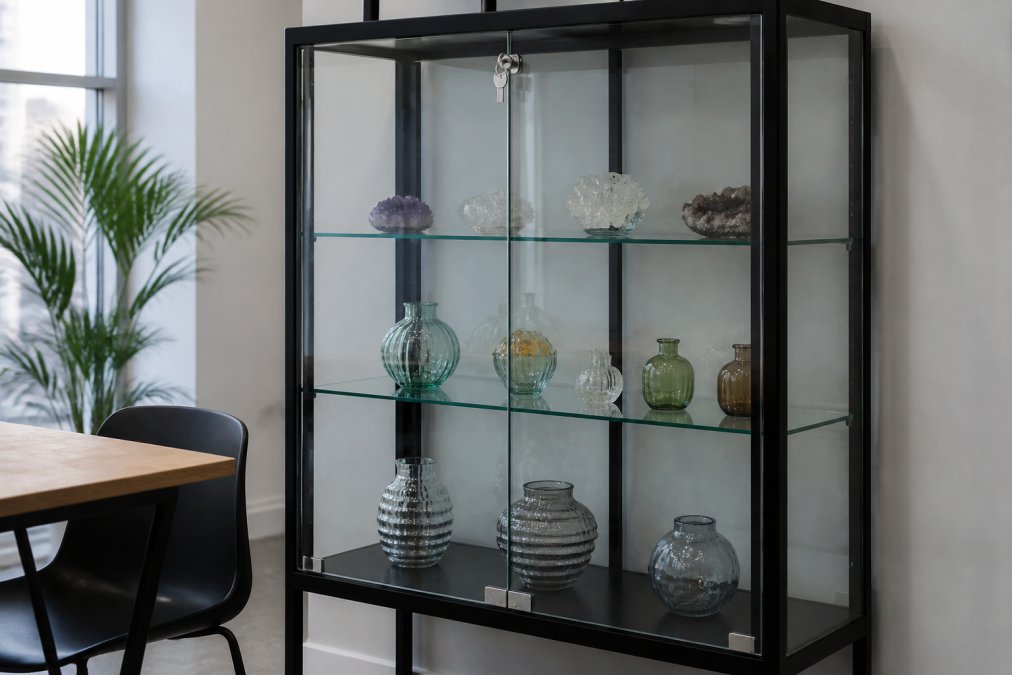
Locking glass display cabinets protect high-value items, but not all locks are equal. The mechanism matters as much as the glass.
Two practical points:
- Ask what the lock is fixed into. A lock screwed into thin MDF will fail under force; one mounted into a solid frame or metal housing will not.
- Check whether the door is single or double. Double doors need either two locks or a central locking bar.
Flatpack vs Pre-Built Display Cabinets
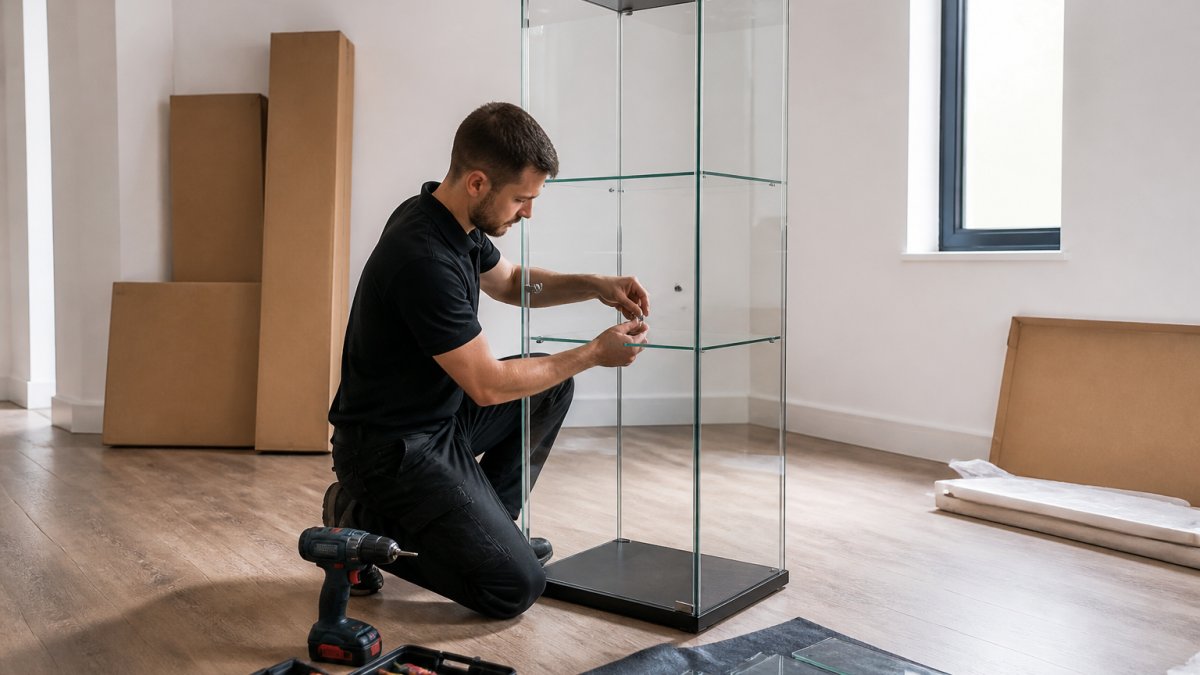
The choice between flatpack and pre-built display cabinets comes down to time, cost and confidence. Flatpack is cheaper and easier to transport. Pre-built arrives ready to use and avoids the assembly problems that cause rattling doors and misaligned glass.
Flatpack suits you if:
- You are comfortable with basic tools and following instructions
- You have someone to help lift panels into place
- You are not working to a tight deadline
Pre-built or a build service suits you if:
- The cabinet is going into a retail environment and needs to look right first time
- You have limited mobility or no one to help with assembly
- You need the cabinet in place for a specific date, such as an opening or renovation handover
Styling, Cleaning and Maintaining Glass Cabinets

For cleaning:
- Use a microfibre cloth and a 50:50 mix of water and white vinegar for streak-free glass.
- Avoid paper towels, which leave lint and can scratch.
- Clean the interior shelves before restocking, not after.
- Wipe the frame and hardware with a dry cloth weekly; fingerprints on brass or black hardware are more visible than on glass.
Frequently Asked Questions
How do I choose a glass cabinet that suits my room?
Start by matching the glass type to your existing decor. Clear tempered glass suits modern kitchens and living rooms, while reeded or fluted glass works well in traditional settings. Measure your available floor space and ceiling height before ordering, and think about whether you want the cabinet to blend in or stand out. A glass display cabinet with lights adds warmth and draws attention to what is inside, so factor in whether you have a nearby power socket.
Are glass display cabinets safe for homes with children?
Yes, provided the glass is tempered or toughened. Tempered glass is shatter-resistant and breaks into small, blunt pieces rather than sharp shards if it does crack. Look for cabinets that meet relevant safety standards and consider wall-anchoring kits for taller units. Locking glass display cabinets also keep curious hands away from valuable or fragile items, which is a practical bonus for families with young children.
What should I look for when buying a glass display cabinet?
Check the glass thickness, the door profile, the locking mechanism and whether lighting is integrated or add-on. Thicker glass (typically 5 mm to 8 mm for domestic cabinets) feels more solid and resists rattling. Confirm the cabinet comes with adjustable shelves, and ask about the finish on the frame, as cheaper powder coats chip easily. If you need a glass display cabinet with lights, verify the LED strip is replaceable rather than sealed in.
Should I choose flatpack or pre-built display cabinets?
Flatpack suits buyers who want to save on cost and are comfortable with basic assembly, typically using a screwdriver and the supplied fittings. Pre-built or build-service options cost more but arrive assembled, which reduces the risk of misaligned doors or scratched glass. If you need the cabinet urgently for a shop fit or renovation deadline, a build service removes the assembly time entirely. Both options should include the same glass and hardware quality, so ask the supplier to confirm.
What type of glass is best for high-traffic areas?
Tempered glass is the standard choice for high-traffic areas because it resists impact and breaks safely if damaged. Frosted or reeded glass hides fingerprints and smudges better than clear glass, which matters in hallways or retail spaces where the cabinet is touched often. If the cabinet sits near a doorway or walkway, choose a model with a recessed door profile so the glass edge is less exposed to knocks.
Do glass cabinets need special cleaning products?
A microfibre cloth and a pH-neutral glass cleaner are enough for most cabinets. Avoid ammonia-based sprays on tinted or coated glass, as they can cloud the surface over time. For fingerprint resistance, some glass comes with an anti-fingerprint coating, but even without it, wiping weekly keeps smears under control. Never use abrasive pads on glass or on powder-coated frames, as they scratch both.