 ultimate-guide
Lockable Display Cabinet Buying Guide 2026
Table of Contents
- What Makes a Lockable Display Cabinet Worth the Investment
- Types of Lockable Display Cabinets and Their Best Uses
- Choosing the Right Glass Display Case Size and Dimensions
- Tempered Glass Display Cabinet Safety Standards and Material Selection
- Security Features: Locks, Hinged Doors, and Tamper-Proof Design
- Lighting Options and Visual Merchandising Impact
- Flatpack vs Pre-Assembled Display Cabinets: Assembly and Installation Complexity
- Maintenance, Cleaning, and Long-Term Care
- Frequently Asked Questions
Last Updated: September 18, 2026
What Makes a Lockable Display Cabinet Worth the Investment
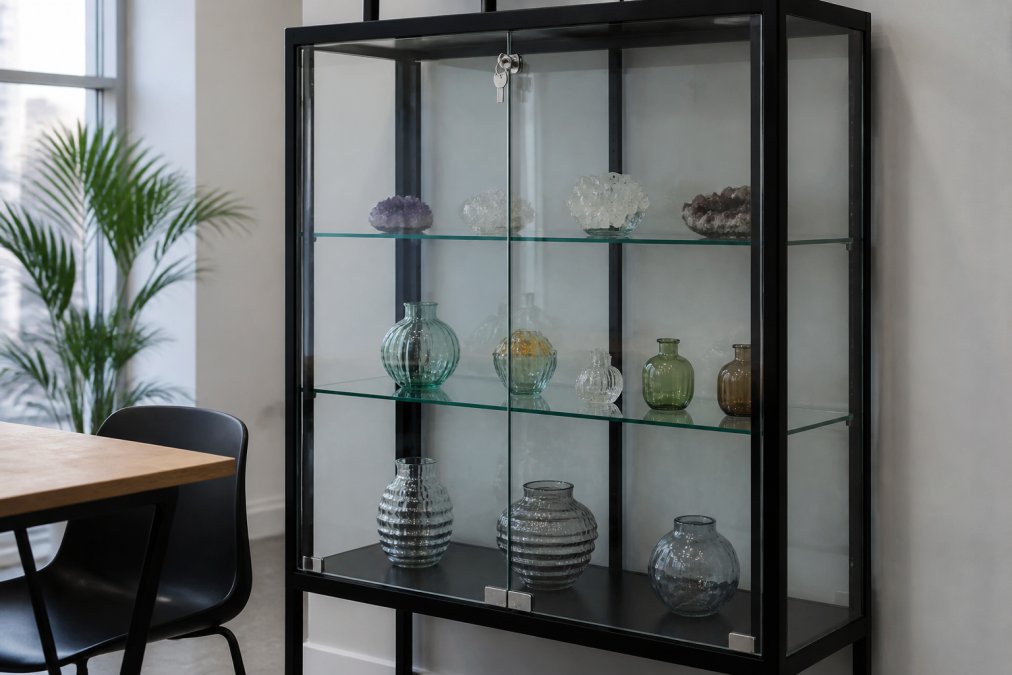
A lockable display cabinet showcases and protects valuable items whilst preventing unauthorised access through secure locking mechanisms, combining security, visual appeal, and preservation.
A quality lockable display cabinet safeguards valuables from theft, dust, and environmental damage whilst presenting them professionally. The difference between a basic cabinet and a well-engineered one becomes apparent within weeks of use.
Customers who prioritise structural integrity and security features over price alone report the fewest problems: no rattling doors, dust accumulation, or security concerns.
This buying guide covers everything you need to know to select the right lockable display cabinet for your space and needs. Below, we'll examine cabinet types, sizing considerations, material standards, security mechanisms, and the practical differences between flatpack and pre-assembled options.
Types of Lockable Display Cabinets and Their Best Uses
The cabinet type you choose depends on your space, the items you're displaying, and how prominently you want the display to feature in your room.
Floor-Standing Cabinets
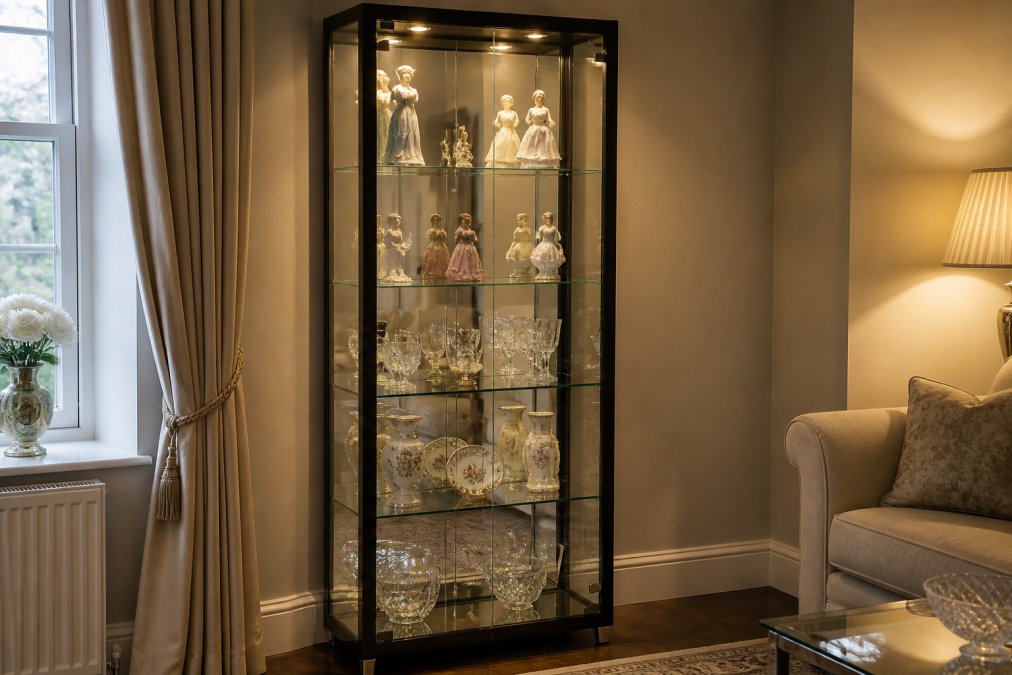
Floor-standing units typically measure 1.5-2 metres tall and work well as statement pieces in living rooms, home offices, or retail environments.
Floor-standing cabinets provide excellent weight capacity and stability, with many featuring a base cabinet section for out-of-sight storage.
The main consideration is floor space and clearance for doors to open fully.
Countertop Display Cases
Countertop cases typically range from 60-120 cm wide and 40-80 cm tall, working well on desks, shop counters, or shelving units.
Countertop cabinets excel in retail environments for high-value items at eye level and suit home collectors with smaller collections in compact spaces.
The trade-off is display volume; these work best for curated selections rather than extensive collections.
Wall-Mounted Vitrines
Wall-mounted cabinets save floor space entirely, typically extending 15-25 cm from the wall, ideal for small rooms or tight retail layouts.
Vitrines work well for flat items like medals, certificates, or artwork. The main limitation is weight capacity; they're best for lighter collectibles.
Installation requires secure wall anchoring to studs. Proportion matters aesthetically: small vitrines on large walls can look undersized, whilst large units on small walls feel cramped.
Choosing the Right Glass Display Case Size and Dimensions
Size selection is where most purchasing mistakes happen.
Measuring Your Space and Footprint
Measure width, depth, and height, then subtract 5-10 cm from each dimension to ensure comfortable fit and door clearance.
The cabinet shouldn't occupy more than 25-30% of the wall space; oversized units dominate small rooms, whilst undersized ones look lost in large spaces.
Account for skirting boards and protruding features like radiators or light switches.
Weight Capacity and Shelf Adjustment
Collectible glassware is surprisingly heavy; a single shelf can easily exceed 20-30 kg. Confirm the cabinet's weight capacity exceeds your collection's total weight by at least 50%.
Adjustable shelves let you adapt the cabinet as your collection grows. Ensure adjustment increments are small enough (usually 2-3 cm) to accommodate varying item heights.
Quality shelf systems hold shelves firmly in place; cheap pin systems feel loose and allow shifting.
Tempered Glass Display Cabinet Safety Standards and Material Selection
The glass you choose directly impacts both safety and visual clarity. This is where material selection becomes non-negotiable, particularly if you're displaying valuable items or operating a retail space.
Glass Types: Tempered vs Standard Acrylic
Tempered glass is the industry standard; it's heat-treated to increase strength and shatters into harmless granules rather than dangerous shards, essential for homes with children or retail environments.
Acrylic is cheaper but scratches easily, yellows over time, and feels less premium. For valuable collections, it undermines professional presentation.
Avoid standard (non-tempered) glass; it breaks into dangerous shards and offers no safety advantage.
Tempered glass typically measures 4-6 mm thick; 5 mm is the sweet spot for most home and small retail applications.
Dust Resistance and Environmental Control
Dust accumulation is the silent killer of display cabinet satisfaction; poor dust resistance requires cleaning every few weeks.
Quality cabinets use weatherstripping around doors; the seal should feel slightly resistant when closing. Cheap cabinets have loose-fitting doors that allow constant dust ingress.
For items sensitive to humidity or temperature, consider cabinets with environmental control features like humidity regulators or temperature monitoring.
Security Features: Locks, Hinged Doors, and Tamper-Proof Design
A cabinet that looks secure but isn't creates a false sense of protection.
Lock Types: Push-In and Cam Locks
Push-in locks are convenient but offer minimal security; they prevent casual access but won't withstand deliberate tampering.
Door Mechanisms: Hinged vs Sliding
Hinged doors swing open and provide full access to the interior, requiring clearance room in front of the cabinet.
Lighting Options and Visual Merchandising Impact
Proper lighting transforms how your collection appears, making items look significantly more attractive and valuable.
Flatpack vs Pre-Assembled Display Cabinets: Assembly and Installation Complexity
The choice between flatpack and pre-assembled cabinets affects not just the initial cost, but the entire ownership experience.
Flatpack Assembly: What to Expect
Flatpack cabinets require on-site assembly, typically 2-4 hours for a floor-standing unit, with basic tools needed: drill, screwdriver set, spirit level, and measuring tape.
Professional Build Service Benefits
We offer a professional build service where trained technicians assemble and install your cabinet on-site, ensuring perfect level, proper door alignment and sealing, and correct security function.
Check availability early for time-sensitive displays.
| Assembly Option | Time Required | Technical Skill | Risk of Issues | Recommended For |
|---|---|---|---|---|
| DIY Flatpack | 2-4 hours | Intermediate | Moderate to High | Confident DIYers, non-critical displays |
| Professional Build | None (technician handles) | None required | Very Low | Valuable collections, retail environments, time constraints |
Maintenance, Cleaning, and Long-Term Care
Minimal maintenance extends the cabinet's lifespan and keeps your collection pristine.
Frequently Asked Questions
What should I look for when buying a lockable display cabinet?
Focus on four key areas: security (reliable lock mechanism and tamper-proof construction), glass quality (tempered glass for safety), internal layout (adjustable shelving and weight capacity for your items), and lighting (integrated LED options for visibility). For high-value collections, verify that the cabinet meets recognised safety standards for glass and has a sturdy base. Check the dust-resistant seal and whether the door hinges are solid, these prevent the rattling and warping problems common in budget flatpacks.
How do I choose the right size display case for my items?
Measure your available space first, accounting for clearance around skirting boards and other furniture. Consider your collection's footprint, don't just focus on height. Check the shelf weight capacity to ensure it supports your heaviest items. For retail environments, a floor-standing cabinet typically requires 0.5-1 square metre of floor space. Countertop cases work well for smaller collections. Customisable shelving lets you adjust spacing to fit different sized pieces, so verify whether the cabinet offers this flexibility before purchasing.
Are tempered glass display cabinets safer for retail environments?
Yes. Tempered glass is significantly stronger than standard glass and shatters into small, harmless granules rather than sharp shards if broken, critical for retail security and customer safety. It also resists thermal stress better, making it ideal for cabinets with integrated LED lighting. For retail use, tempered glass combined with a quality cam lock or push-in lock system provides the professional appearance and security customers expect. Verify that any cabinet you consider meets relevant safety standards for glass and structural integrity.
What's the difference between flatpack and pre-assembled display cabinets?
Flatpack cabinets arrive in pieces and require assembly, typically 2-4 hours depending on complexity. They're more affordable and easier to transport but demand time and care during setup. Pre-assembled (or build service) options arrive ready to use or professionally assembled on-site, eliminating assembly risk and ensuring structural integrity. A professional build service is worth considering if you need the cabinet urgently, lack assembly confidence, or want to guarantee no loose joints or rattling.
Do lockable display cabinets come with integrated lighting options?
Most quality lockable cabinets offer integrated LED lighting, which enhances visual merchandising and helps display items clearly. LED options are energy-efficient and produce minimal heat, so they won't damage delicate collectibles. Some cabinets include adjustable brightness or colour temperature settings. Verify that any lighting system is professionally wired and safe, especially for retail use. Rear access wiring keeps cables hidden and maintains the cabinet's aesthetic appeal.
How do I prevent dust and environmental damage inside a locked display cabinet?
Choose a cabinet with a dust-resistant seal around the doors and base. Ensure hinged or sliding doors close tightly without gaps. Position the cabinet away from direct sunlight, heating vents, and damp areas. Customisable shelving lets you organise items with proper spacing to prevent moisture trapping. For valuable collections, consider environmental control, some premium cabinets offer intelligent sensors to monitor temperature and humidity. Regular gentle cleaning of glass and shelves (with the cabinet locked) maintains both appearance and protection.
Can I use a lockable display cabinet in a small retail shop?
Absolutely. Retail-grade display cabinets enhance visual merchandising and protect high-value stock from theft and damage. A floor-standing cabinet with tempered glass, professional-looking ormolu mounts or metal trim, and integrated lighting projects premium quality to customers. Ensure the cabinet's proportions suit your shop layout and that the lock mechanism is reliable. A professional build service ensures the cabinet arrives in perfect condition and is properly positioned, important for retail environments where appearance and security matter equally.