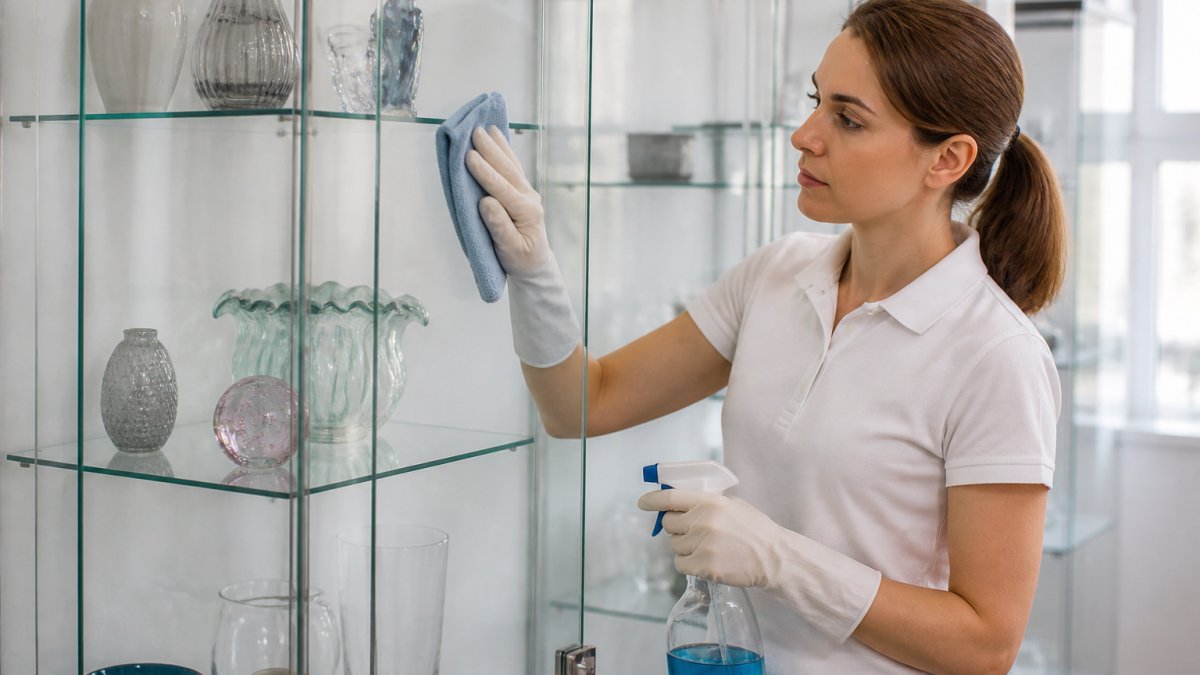
 how-to
How to Clean Glass Display Cabinets Without Streaks
Table of Contents
- How to Clean Glass Display Cabinets: A Step-by-Step Workflow
- Glass Cabinet Cleaning Tools You Actually Need
- The Best Glass Cleaner for Display Cabinets (and What to Avoid)
- How to Clean Glass Shelves Inside a Display Cabinet
- Tackling Fingerprints, Grease and Hard-Water Marks on Glass Cabinet Doors
- How Often to Clean Display Cabinets (and Keep Them Cleaner for Longer)
- Common Mistakes That Scratch Glass Display Cabinets
- Frequently Asked Questions
Last Updated: October 15, 2026
How to Clean Glass Display Cabinets: A Step-by-Step Workflow
Learning how to clean glass display cabinets properly protects both the cabinet and whatever you keep inside it. A steady, top-to-bottom routine takes about 15 minutes per cabinet and leaves glass clear, not smeared.
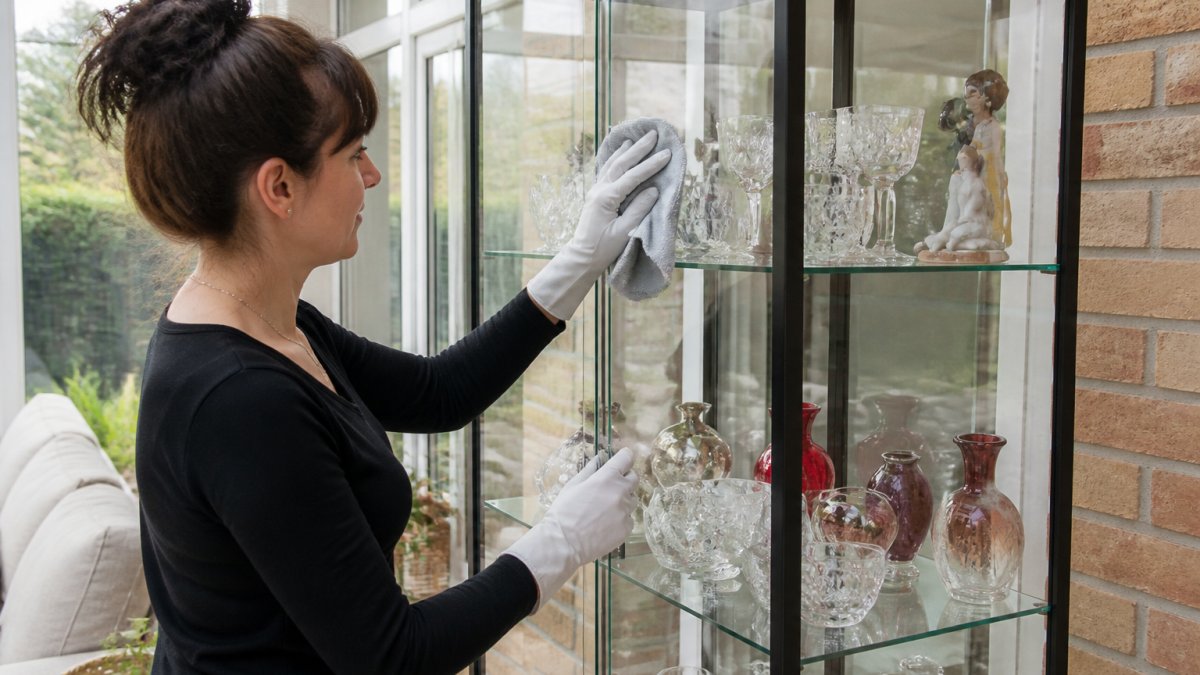
We supply cabinets that hold everything from glassware to high-value collectibles, so we know how quickly dust and fingerprints build up on glass doors and shelves.
Here is the full sequence we recommend:
- Empty the cabinet and set items on a soft towel.
- Dust the frame, top and interior with a dry microfibre cloth.
- Spray cleaner onto your cloth, never onto the glass.
- Wipe shelves and glass panels in long, overlapping strokes.
- Dry immediately with a second, clean cloth.
- Clean the exterior doors last, top to bottom.
- Let surfaces dry fully before you put anything back.
Work in this order and you avoid the classic mistake of cleaning a shelf, then dropping dust onto it from the frame above. The UK government guidance on safe use of household cleaning products is a useful reference for handling any cleaner safely.
Glass Cabinet Cleaning Tools You Actually Need
You need fewer tools than most guides suggest, but the ones you choose matter more than the number. A couple of soft cloths, a spray bottle and a soft brush cover almost every job, provided you keep them clean and use them in the right order.
The right glass cabinet cleaning tools are simple and cheap:
- Two microfibre cloths, one for the cleaning solution, one dry for buffing. Microfibre works because the split fibres trap dust and grease rather than pushing it around, which is why it outperforms cotton on fingerprints.
- A lint-free cloth or a clean cotton cloth for the final polish. Lint left behind on glass catches light and looks like streaks even when the surface is clean.
- A soft brush, a dry paintbrush or a soft detailing brush, for dust in corners, around shelf supports and along the cabinet frame. Brushes reach where cloths smear dust into the joint.
Skip abrasive pads and abrasive cleaners entirely. They leave fine scratches that trap dirt and make glass look cloudy over time. A clean rag and a soft cloth will always beat a scouring pad on glass.
Match the cloth to the surface
The tool you use should change with the cabinet material:
- Glass panels and shelves: microfibre only. Cotton can shed fibres and drag grit.
- Wood, painted or veneered frames: a barely damp cloth, then a dry buff. Excess water swells timber and lifts veneer at the edges.
- Metal frames and handles: a separate cloth. Metal polish residue transfers to glass and shows as a grey film.
Keep the tools clean
A dirty cloth is the most common cause of a scratched cabinet. After each use, rinse microfibre cloths in warm water without fabric softener, which clogs the fibres and reduces their grab. Wash brushes separately and dry them fully before storing. Replace microfibre cloths when they feel stiff or start leaving lint; most households get a few months of regular use from a good set.
Health and Safety Executive guidance on chemicals at home
The Best Glass Cleaner for Display Cabinets (and What to Avoid)
The best glass cleaner for display cabinets is a simple mix of one part white vinegar to four parts water, or a commercial ammonia-free glass cleaner for tougher marks.
For most jobs, a diluted solution does everything you need:
| Cleaner | Best For | Avoid When |
|---|---|---|
| Vinegar and water | Everyday dust and smudges | You dislike the smell |
| Commercial glass cleaner | Quick touch-ups | It contains ammonia near coatings |
| Methylated spirits | Grease and sticky residue | You have a tinted or coated panel |
| De-ionized water | Final streak-free rinse | Never, it is always safe |
Use de-ionized water for the last pass if your tap water is hard. Hard water leaves mineral spots that look like streaks even when the glass is clean.
For grease or adhesive residue, dampen a cloth with methylated spirits or alcohol and dab, do not scrub.
Health and Safety Executive guidance on chemicals at home
How to Clean Glass Shelves Inside a Display Cabinet
To clean glass shelves, lift each one out, wipe both sides with a damp cloth, then dry it fully before sliding it back. Cleaning shelves in place just pushes dust into the cabinet frame.
Follow these steps:
Check out →
- Remove all items and set them aside safely.
- Lift out each shelf and lay it flat on a towel.
- Wipe both faces with your vinegar solution.
- Buff dry with a lint-free cloth.
- Dust the shelf supports and frame before refitting.
- Slide shelves back once fully dry.
Glass shelves are the easiest part of the job because you can take them to a sink or table. Handle them by the edges and support the full width so they do not flex.
Tackling Fingerprints, Grease and Hard-Water Marks on Glass Cabinet Doors
Fingerprints, grease and hard-water marks each need a slightly different approach. Fingerprints come off with a normal wipe, grease needs a solvent, and hard-water marks need a mild acid like vinegar.
Here is how to match the fix to the mark:
- Fingerprints and smudges: a dry microfibre cloth, buffed in circles.
- Grease: a cloth dampened with methylated spirits, then a clean dry pass.
- Hard-water marks: white vinegar left to sit for a minute, then wiped and rinsed.
- Adhesive residue: alcohol on a cloth, dabbed gently until it lifts.
Glass cabinet doors take the most handling, so they collect the most marks. Clean the door edges and handles too, since these are where hands land. Buff the whole panel in one direction for the cleanest finish.
Match the cleaner to the mark. Using a strong solvent on a simple fingerprint wastes effort, and using plain water on grease just spreads it around.
How Often to Clean Display Cabinets (and Keep Them Cleaner for Longer)
Clean display cabinets every two to four weeks for a light dust and wipe, with a deeper clean every three months. That baseline suits a closed cabinet in a low-traffic room. The right interval for your cabinet depends on where it sits and what it holds, so treat the schedule below as a starting point and adjust it to what you actually see.
A simple schedule keeps glass clear:
- Weekly: quick dry-dust of doors and top surfaces with a microfibre cloth. This removes the dust that otherwise bonds to glass and needs a wet clean later.
- Fortnightly: full wipe of glass and frame with your diluted solution, then a dry buff.
- Quarterly: empty, deep clean of shelves, shelf supports and interior, including the top panel where dust settles out of sight.
- As needed: spot-clean fingerprints and smudges on handles and door edges.
Adjust the schedule to the room
The same cabinet needs different attention depending on its setting:
- Kitchen or open-plan dining area: weekly wipe of the exterior. Cooking produces airborne grease that settles on glass as a fine film and attracts dust. A cabinet within a few metres of a hob will need the exterior cleaned far more often than the interior.
- Retail or reception display: daily or every other day for doors and handles, because multiple people touch the same surfaces. A weekly full clean of shelves is typical where stock is handled.
- Living room or hallway: the fortnightly baseline is usually enough unless the cabinet sits near a radiator or open fire.
- Bathroom or utility room: check monthly for condensation and water spotting. Humidity is the main enemy here, not dust.
Preventive habits that do more than cleaning
Prevention matters more than elbow grease. These habits reduce how often you need to clean at all:
- Keep the door closed. An open cabinet collects dust on every shelf within days.
- Use handles rather than touching the glass. Fingerprints are the single most common reason people clean a cabinet early.
- Keep the cabinet away from direct heat and steam. Heat drives convection currents that carry dust into the cabinet and can dry out timber frames.
- Control humidity. In damp rooms, a small silica gel pack inside the cabinet helps protect both the glass and the contents. Replace or recharge it as directed.
The National Trust's conservation guidance on caring for glass and ceramics
Common Mistakes That Scratch Glass Display Cabinets
The fastest way to damage a cabinet is to clean it too hard. Most scratches come from abrasive pads, gritty cloths and spraying liquid straight onto the glass.
Avoid these mistakes:
- Spraying cleaner directly on glass, which runs into the frame and leaves residue.
- Using paper towels or newspaper, which can leave lint and fine scratches.
- Reusing a dirty cloth that carries grit across the surface.
- Cleaning in direct sunlight, which dries the solution too fast and leaves streaks.
If you do pick up a scratch, do not try to polish it out with an abrasive. On coated or tinted glass you can make it worse. Prevention is the whole game here.
Frequently Asked Questions
How do you clean a glass display cabinet without leaving streaks?
Work in small sections and use a two-cloth method: one damp microfibre cloth to lift dirt, then a separate dry lint-free cloth to buff immediately before the surface dries on its own. Use de-ionized or distilled water in your solution if your tap water is hard, as dissolved minerals are a common cause of streaks. Avoid cleaning in direct sunlight or on a hot day, because the solution evaporates too quickly to wipe off evenly. Finish by checking the glass at an angle under a lamp, which reveals any missed smears.
Can you use vinegar to clean glass cabinet doors?
Yes, a diluted white vinegar and water mix works well on most plain glass cabinet doors and is a cheap alternative to commercial cleaner. Mix roughly one part white vinegar to four parts water, spray lightly, and buff dry with a lint-free cloth. Do not use vinegar on frosted, etched, mirrored, or anti-reflective glass, and keep it away from natural stone, aluminium frames and any surface where acid could dull the finish. Test on a hidden corner first if you are unsure about the coating.
How do you clean glass shelves inside a display cabinet?
Take everything off the shelf and remove the shelves one at a time if the cabinet allows. Lay each shelf flat on a towel and wipe both sides with a soft cloth dampened with warm water and a drop of mild washing-up liquid, then rinse with a clean damp cloth and dry immediately with a lint-free cloth. Never pour water directly onto a shelf or soak it, and never use abrasive pads or scouring cream, as these leave fine scratches that trap dust and make future cleaning harder.
How often should you clean a glass display cabinet?
For a typical home cabinet, a light dust and fingerprint wipe every one to two weeks is enough, with a full clean of the glass, shelves and frame every four to six weeks. Retail cabinets in a shop or office need more attention: daily or every few days for the doors, since customers touch them constantly, and a full clean weekly. If you display high-value or delicate collectibles, clean the empty cabinet before returning items rather than working around them, which reduces the risk of knocks and scratches.
Cleaning a glass display cabinet is a job anyone can do well with the right order of work and a soft touch. The challenge is keeping it that way, and a cabinet built to seal properly does half the work for you. Display Cabinets UK supplies premium glass display cabinets with locks and lights, available as flatpack or with our build service and free nationwide delivery. Check out our range to find a cabinet that stays clear, secure and dust-free for years.