 how-to
Is a Black Display Cabinet Worth the Money?
Last Updated: October 29, 2026
Quick Summary
A black display cabinet is worth the money when you choose on construction, not looks alone. Check the frame, glass and shelf count before buying, because metal frames suit heavy collectibles, glass gives maximum visibility and wood adds warmth to traditional rooms.
- The biggest buying mistake is choosing a cabinet on looks alone rather than construction.
- Metal frames with strong shelves best suit heavy collectibles such as die-cast models and crystal.
- A five-tier cabinet gives five display zones for mixed collections.
- A cabinet deeper than about 40cm lets you stagger front and back rows.
- Measure the doorway and stair turn before ordering so the cabinet fits.
Table of Contents
- What to Look For in a Black Display Cabinet
- How to Style a Display Cabinet Without Clutter
- Display Cabinet Lighting Ideas for Glass and Black Finishes
- Why a Lockable Black Display Cabinet Matters for Valuable Items
- Choosing a Black Display Cabinet for Living Room Spaces
- Measuring, Placement and Safe Loading Before You Buy
- Flatpack or Built for You: Choosing Your Delivery and Assembly Option
- Frequently Asked Questions
What to Look For in a Black Display Cabinet
A black display cabinet is a glass-fronted storage piece with a dark frame or carcass, built to show off treasured objects while protecting them from dust and handling. The single biggest buying mistake shoppers make is choosing on looks alone.
Below, we break down exactly what separates a cabinet worth owning from a cheap flatpack that rattles, sags and gathers dust.
Glass, metal or wood: which construction suits your collection
Construction is the decision that matters most, and it is the one most buyers rush.
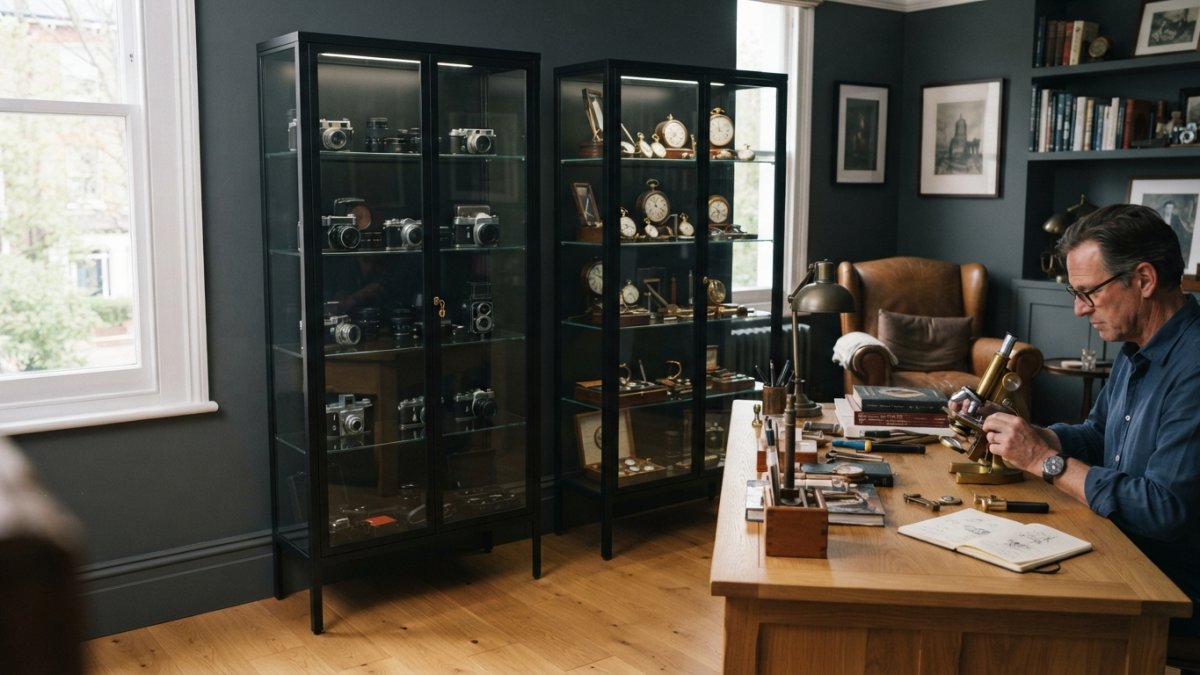
- Metal frame: slim profiles, strong shelves and a modern or industrial look. Best for heavy collectibles such as die-cast models, crystal and full glassware sets.
- Glass: maximum visibility and a light footprint in a room. Tempered glass shelves are a practical choice for display.
- Wood: warmth and a furniture-like finish that suits traditional living rooms.
A common mistake is buying a glass cabinet with shelves rated for ornaments, then loading it with books or a full dinner service. Check the shelf loading guidance before you commit.
Sizes, shelves and display capacity
Measure your space, then measure it again. Cabinet dimensions are usually quoted as width, depth and height, and depth is the number buyers often forget.
Think in tiers. A five-tier cabinet gives you five separate display zones, which suits mixed collections: tall pieces on the bottom, smaller treasures higher up where they catch the light.
Here is how the three main construction types compare for a black display cabinet.
| Construction | Best for | Key difference |
|---|---|---|
| Metal frame | Heavy collectibles such as die-cast models, crystal and full glassware sets | Slim profiles, strong shelves, modern or industrial look |
| Glass | Maximum visibility and a light footprint in a room | Tempered glass shelves are a practical choice for display |
| Wood | Traditional living rooms | Warmth and a furniture-like finish |
How to Style a Display Cabinet Without Clutter
Styling a black display cabinet is a decision-making exercise, not a decorating afterthought. The cabinets that look considered in photographs follow a repeatable method: decide what the cabinet is for, allocate shelf zones, then edit ruthlessly. Crowd the shelves and even an expensive black glass display cabinet reads as clutter; leave too much empty and it looks unfinished.
Start with a room-and-collection brief
Before you move a single object, write down two things: the room the cabinet sits in and the collection it will hold. This brief determines everything else.
- Living room, mixed collection: aim for a 60/40 split between display and breathing space. Group by material, ceramics together, glass together, metal together, so the eye reads order rather than a jumble.
- Dining room, glassware and dinner service: reserve the lower two tiers for heavier, less frequently used pieces and keep the top tier for the items you want visible from the table. Depth matters here: a cabinet deeper than about 40cm lets you stagger front and back rows without hiding the rear pieces.
- Home office or study, books and objects: treat the cabinet as a working library. Vertical stacks of books on the bottom shelf, objects at eye level, and a single shelf left partly empty to break up the density.
Use a shelf-zone framework
A three-zone approach is one way to organise a display cabinet:
- Anchor zone (bottom tier): the heaviest and largest pieces. This also keeps the centre of gravity low, which matters for stability.
- Hero zone (middle tiers, at eye level): your best two or three objects, spaced so each has clear air around it. Odd-numbered groupings of three or five tend to look more natural than pairs.
- Light zone (top tier): smaller, lighter-coloured or reflective pieces that catch light from above and draw the eye upward.
Vary heights within each zone. A tall vase next to a low bowl creates a step the eye can follow; a row of same-height figurines flattens the display.
Control the background and reflections
A black frame and glass doors create reflections, and reflections are part of the styling. A mirrored back can add a sense of depth, so keep the objects in front of it simple. A high-gloss black frame reflects the room; a matte finish absorbs light and makes the contents the focus. If the cabinet faces a window, expect the glass to mirror the view, style accordingly by keeping the busiest shelf away from the strongest reflection.
Edit, then edit again
Style the cabinet, then remove roughly a fifth of what you placed. The remaining objects will look more deliberate. Rotate pieces seasonally rather than cramming everything in at once; a cabinet that changes is a cabinet that stays interesting.
Display Cabinet Lighting Ideas for Glass and Black Finishes
Display cabinet lighting is what turns a storage cabinet into a showcase, but lighting a black cabinet is not the same as lighting a white or wood one. A dark frame and carcass absorb light, so the same LED strip that flatters a pale cabinet can leave a black one looking flat. Proper illumination ensures that collectors' display items retain their visual depth within these shadowy interiors, much like the careful arrangement required when evaluating if curated book boxes are worth it.
Choose colour temperature by what you are displaying
Colour temperature is measured in kelvin (K) and changes how objects read:
- 2700-3000K (warm white): flatters glassware, ceramics, wood and textiles. The default for a home living room or dining room cabinet.
- 3500-4000K (neutral white): the practical choice for retail and exhibition displays where colour accuracy matters, such as jewellery, artwork or product samples.
- 5000K and above (cool white): can make glass and crystal sparkle but tends to make warm materials look clinical. Use sparingly and never mix with warm white in the same cabinet.
A common mistake is buying the brightest strip available. Brightness is not the goal; even coverage is.
Place light to work with the black finish
For black finishes, light placement matters more than brightness:
- Front-edge shelf lighting: mount LED strips along the front edge of each shelf, angled slightly downward and inward. This washes light across the objects and down the glass doors rather than straight into the viewer's eyes.
- Back or side lighting: a strip at the back of the shelf silhouettes objects against the mirrored or dark back panel. This works well for clear glass and crystal but can flatten opaque ceramics.
- Top-down lighting: a single strip under the cabinet's top panel lights the upper tier and creates a pool of light that draws the eye upward. Pair it with shelf-level strips for even coverage.
Avoid placing lights so they shine directly through the glass at the viewer. Glare makes the contents harder to see, not easier, and on a black cabinet the contrast between a bright reflection and a dark surround is especially harsh.
Check out →
Plan power access before installation
Integrated LED lighting needs power, and retrofitting it is far harder than planning for it:
- Check for a nearby socket before you finalise the cabinet's position. A cabinet placed against a wall with no socket nearby will need an extension lead, which is both a trip hazard and a visual distraction.
- Consider a cabinet with a built-in power inlet or a discreet cable route through the back panel. Many flatpack cabinets have a pre-cut cable notch; check the specification before ordering.
- Use low-voltage LED systems where possible. They run cool, use little power and are safer around glass and stored objects than older halogen bulbs, which produced heat that could damage delicate items and made glass shelves warm to the touch.
Match lighting to the setting
For a home display, warm white LEDs flatter glassware and ceramics best, and a simple dimmer gives more control than a colour-changing system you will rarely adjust.
For deeper guidance, our guide to glass cabinets with lights for home covers LED options and styling in more detail.
Why a Lockable Black Display Cabinet Matters for Valuable Items
A lockable black display cabinet adds a physical barrier between your collection and casual handling, children and opportunist theft. Locks on glass doors will not stop a determined burglar, and a cabinet is no substitute for home insurance or a safe.
For a small retail or office setting, a locking cabinet can help secure high-value pieces at closing time.
If security is your main concern, browse our range of lockable black glass display cabinets to see the options.
Choosing a Black Display Cabinet for Living Room Spaces
A black display cabinet for living room use has to earn its floor space twice: as storage and as furniture.
Floor-standing cabinets anchor a wall and can replace a sideboard, giving you display and storage in one footprint.
You can view the full range of home black glass display cabinets in single, double or corner sizes to compare options for your room.
Measuring, Placement and Safe Loading Before You Buy
Measure the doorway, the stair turn and the final position before you order. A cabinet that will not fit through the door is a problem no amount of styling fixes.
Safe loading follows three rules:
- Anchor the cabinet to the wall where the design allows, especially in homes with children or pets.
- Load heavy items low. Glass shelves carry weight well when it is distributed, but the bottom of the cabinet is the safest place for dense objects.
- Check the floor. A fully loaded cabinet is heavy, so make sure the floor is level and the cabinet sits flat without rocking.
Watch out: never stand on a shelf or use the top of the cabinet as a step. Tempered glass is strong in normal use but not designed for concentrated point loads.
Flatpack or Built for You: Choosing Your Delivery and Assembly Option
Flatpack versus built comes down to time, confidence and the finish you want. Flatpack cabinets suit buyers who are comfortable with tools and assembly. A build service removes the need to assemble the cabinet yourself.
At Display Cabinets UK, we supply premium glass display cabinets with locks and lights as flatpack, and we also offer a build service with free nationwide delivery. If you are weighing up the two routes, our guide to the glass display case assembly service compares flatpack and built options so you can decide before you order.
To see the full range, Check our black display cabinets for current prices and availability.
Frequently Asked Questions
What should I look for when buying a black display cabinet?
Start with the construction and check the specification of any cabinet you consider. Check the internal dimensions against your tallest item, confirm whether the doors lock, and decide if you need integrated LED lighting. Look for adjustable shelves, a mirrored back if you want more light, and a finish that matches your room. Also confirm whether wall anchoring hardware is included, since a tall cabinet should always be fixed to the wall.
Are black display cabinets suitable for small rooms?
Yes, provided you choose the right shape. A corner cabinet or a narrow floor-standing unit uses dead space and keeps the room feeling open. Measure the width, depth and height of your gap first, and leave at least 60 cm of clearance in front of the doors so you can open them fully. A mirrored back also makes a small room feel deeper.
Are display cabinets with glass doors lockable?
Many are, but not all. A lockable black display cabinet typically uses a cam lock or a cylinder lock fitted to the door frame. Ask whether the lock is supplied as standard or an optional extra, and check that the key is removable in both the locked and unlocked positions. For high-value collectibles or a retail setting, check the glass and frame specification before you buy.
What lighting works best in a display cabinet?
Warm white (around 3000K) flatters glassware and wood, while cool white suits silver and memorabilia. Place strips at the front of each shelf rather than the back to light the objects rather than the wall. If glare is a problem, choose a diffused strip or fit a dimmer. RGB and remote-controlled options let you change the mood for evening displays.
Choosing a display cabinet should feel like an upgrade, not a gamble. If you want a cabinet that arrives square, locks properly and lights your collection the way it deserves, Display Cabinets UK supplies premium glass display cabinets with locks and integrated lights, flatpack or built by our team, with free nationwide delivery. Get started with Display Cabinets UK and give your treasured objects the showcase they have earned.