 how-to
Protect Valuables From Children: A Safety Guide
Last Updated: October 22, 2026
Quick Summary
Protect valuables from children by combining locked storage with height and barriers: use locked display cabinets, home safes, or closed storage for fragile items, small choking hazards, and dangerous materials. Match storage to each item type, keep keys secure on your person, and supervise with age-appropriate education about what is safe to touch.
- Store items under 5 centimetres in locked cabinets for children under 3 years old
- Test display cabinet locks at least 10 times before use to ensure solid construction and smooth operation
- Keep spare keys with a trusted adult outside the household or in a locked key safe mounted out of reach
- Create one or two safe zones with permitted toys so children have somewhere to explore without constant warnings
- Review your storage plan when children reach new developmental stages: crawling, climbing, school age, and teenage years
Table of Contents
- Why Protecting Valuables From Children Matters
- Assess Your Home for Hazards and Access Points
- Keep Fragile Items Out of Reach of Children
- Using a Display Cabinet With Lock for Secure Storage
- How to Store Valuables Safely at Home
- Childproof Display Cabinet Features and Installation
- Supervision, Education, and Emergency Access
- Marking and Identifying Personal Belongings
- Frequently Asked Questions
Why Protecting Valuables From Children Matters
Children are naturally curious, and that curiosity can lead to accidents when valuables are within reach.
The challenge is balancing display with safety: keeping valuables visible and accessible to you but out of reach for young hands. A proper storage strategy achieves both.
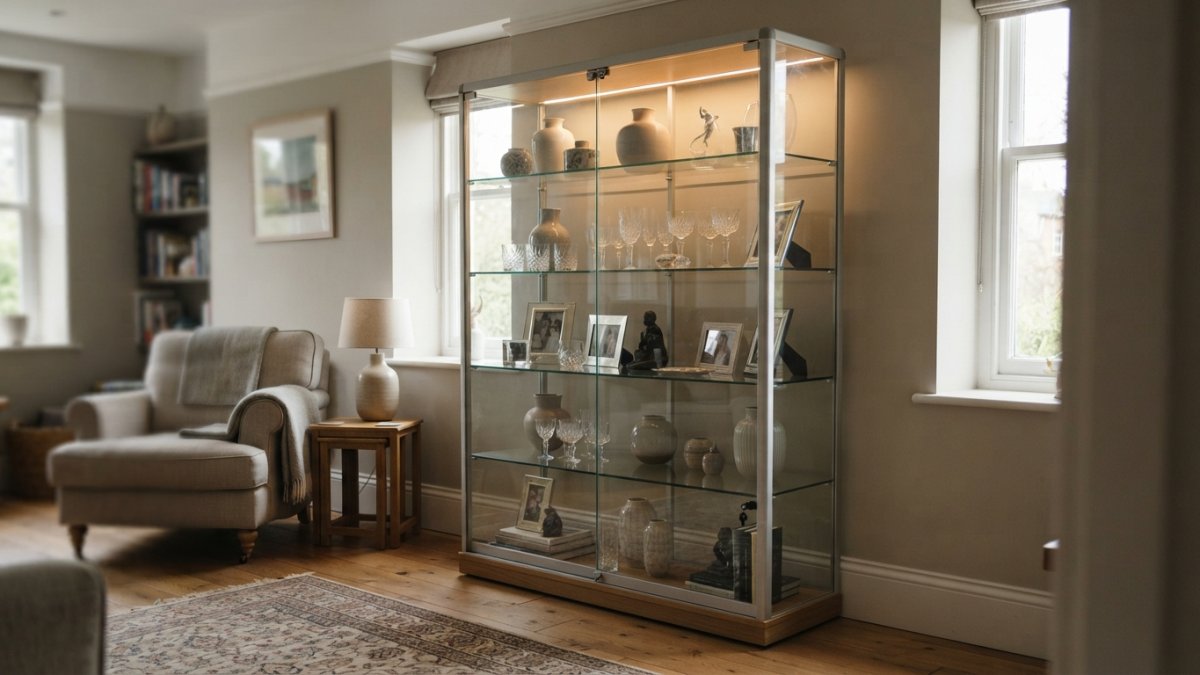
Our locked display cabinets combine security with style, letting you showcase items safely while keeping children protected.
Assess Your Home for Hazards and Access Points
Before buying storage, walk through your home at a child's eye level and note what catches their attention.
Identify specific hazards in each room:
- Fragile items on open shelves, glassware, ceramics, decorative pieces
- Small objects that pose choking risks, coins, buttons, jewellery
- Electronics or cords, devices with batteries, charging cables
Next, assess access points: can your child reach items by standing on furniture, open drawers or doors, or climb to higher shelves?
Common problem areas include:
- Living room display shelves
- Bedroom dressers
- Kitchen counters and lower cabinets
Once you've identified hazards and access points, you can choose appropriate storage strategies to protect valuables from children: some items need locked cabinets, others just need moving higher or into closed storage.
Keep Fragile Items Out of Reach of Children
Height and Visibility Rules
The safest place for fragile items is out of sight and out of reach, though you may want to display them. Height matters significantly.
The best approach combines height with barriers. A locked cabinet at any height is safer than an open shelf, no matter how high it sits.
For items you must keep accessible to yourself but away from children, consider wall-mounted shelves too high for climbing, locked cabinets at any height, closed storage with childproof locks, or display cabinets with secure locking mechanisms.
Visibility matters for your peace of mind too: a display cabinet with a lock lets you see and enjoy your valuables safely.
Age-Specific Storage Strategies
Storage needs change as children grow. A strategy that works for a toddler won't work for a 10-year-old.
For children under 3 years old:
- Keep all small items completely out of reach
- Use locked cabinets for anything under 5 centimetres
- Store fragile items at least 1.5 metres high
For children aged 3-6 years:
- Lock all cabinets containing valuables or hazards
- Move fragile items higher or into closed storage
- Educate children about "look but don't touch" items
For children aged 7-12 years:
- Educate about the value and fragility of items
- Use locked cabinets for expensive or sentimental pieces
- Create designated "safe to touch" display areas
For teenagers:
- Explain why items are stored securely
- Involve them in protecting family valuables
- Store high-value items in locked cabinets or safes
Using a Display Cabinet With Lock for Secure Storage
Locking Mechanism Standards and Testing
A display cabinet is only as secure as its lock. Not all locks are equal.
Good locking mechanisms have these features:
- Solid construction, metal components, not plastic
- Smooth operation, locks and unlocks without jamming
- Consistent engagement, closes securely every time
When you buy a display cabinet with lock, test the mechanism yourself: open and close it at least 10 times, check it feels solid and catches smoothly, and try to jiggle the door open without the key.
The lock should feel firm, with no play or wobble in the door when locked.
For a cabinet holding valuables or near children, the locking mechanism is the most important feature: a beautiful cabinet with a weak lock defeats the purpose entirely.
Our cabinets feature reliable locking mechanisms, each checked before delivery to ensure the lock functions properly and securely.
How to Store Valuables Safely at Home
Not all valuables need the same treatment: a passport, a gold chain, a laptop and a child's coin collection have different risks, access needs and storage answers. Treating them alike is how things get lost, damaged or found by small hands.
Use this section as a decision guide. Match the item to the storage, then layer child-resistant access on top.
Match the storage to the item
| Item type | Main risks | Suitable storage | Child-resistant access |
|---|---|---|---|
| Jewellery and heirlooms | Theft, loss, choking (small parts) | Locked display cabinet for display pieces; home safe for high-value or rarely worn pieces | Keyed or combination lock; keys kept on an adult's person or in a locked key safe |
| Cash | Theft, being found and played with | Small home safe bolted down; safety deposit box for larger sums | Combination or key lock; never store the key or code near the safe |
| Documents (passports, deeds, certificates) | Loss, fire, water, identity theft | Fire-rated and water-rated home safe; safety deposit box for originals you rarely need | Locked safe; copies kept separately |
| Medication | Poisoning, overdose | Locked medicine cabinet or lockable box, ideally in a room children do not play in | Child-resistant closures plus a locked outer container |
| Electronics and gadgets | Damage, theft, battery and cable hazards | Locked drawer or cabinet for active devices; display cabinet for collections | Locked storage; cables tidied and routed out of reach |
| Sentimental items | Loss, damage, being handled | Closed, locked storage away from damp and sunlight; acid-free boxes inside | Locked cabinet or safe |
A locked display cabinet suits jewellery and collectibles you want to see. A home safe suits items you rarely need but cannot replace. A safety deposit box suits documents and high-value items you access only a few times a year. Most households need a mix rather than one solution.
Jewellery and cash
Jewellery is small, portable and often sentimental, a triple risk of theft, loss and choking.
For cash, keep only a small float at home in a locked safe, not a drawer or wardrobe; larger sums belong in a bank or safety deposit box. Never keep the key or combination in the same room as the safe.
Photograph each piece of jewellery flat on a plain background with a ruler for scale. Keep the photos with your insurance documents, not with the jewellery itself.
Documents and electronics
Documents need protection from fire and water as well as from children. A fire-rated document safe is the practical answer for passports, birth certificates, deeds and insurance policies; check the rating label states a time and temperature rating.
Electronics need a different approach: keep active devices such as phones, tablets and laptops in a locked drawer or cabinet when not in use, with charging cables routed behind furniture.
Child-resistant access control
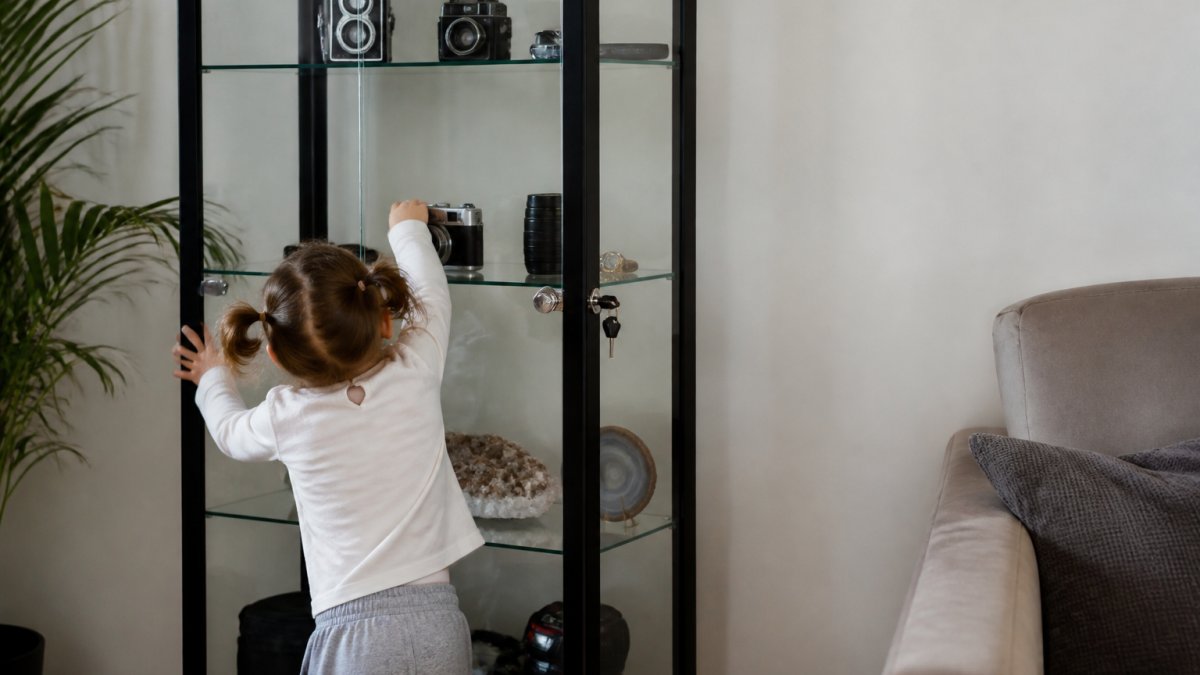
Storage is only child-resistant if the child cannot get to the key, code or opening mechanism. A locked cabinet with the key on the shelf above it is not secure.
- Keep keys on an adult's person or in a locked key safe mounted out of reach.
- Use combination locks and change codes from any default setting.
- Avoid hiding keys in obvious places such as the top of the door frame, a plant pot or a kitchen drawer.
Children watch what adults do far more closely than adults expect. Entering a safe code in front of a child is the most common way a code stops being secret.
Check out →
Balancing security with emergency access
Every locked storage decision has a trade-off: the harder it is for a child to open, the harder it may be for you to open in a hurry. Plan for this before you need it.
- Keep a spare key for each locked cabinet or safe with a trusted adult outside the household, or in a sealed key safe with a code you can remember.
- Store the combination for a home safe in a password manager or a sealed envelope in a separate locked location, not taped to the safe.
- Keep essential medication in a locked box you can open quickly, and know where the key is at all times.
A common pattern is to use one lockable container for items you need daily and a separate, more secure safe for items you need only occasionally, so emergency access stays quick without weakening protection for the most valuable items.
Childproof Display Cabinet Features and Installation
Choosing the Right Cabinet for Your Home
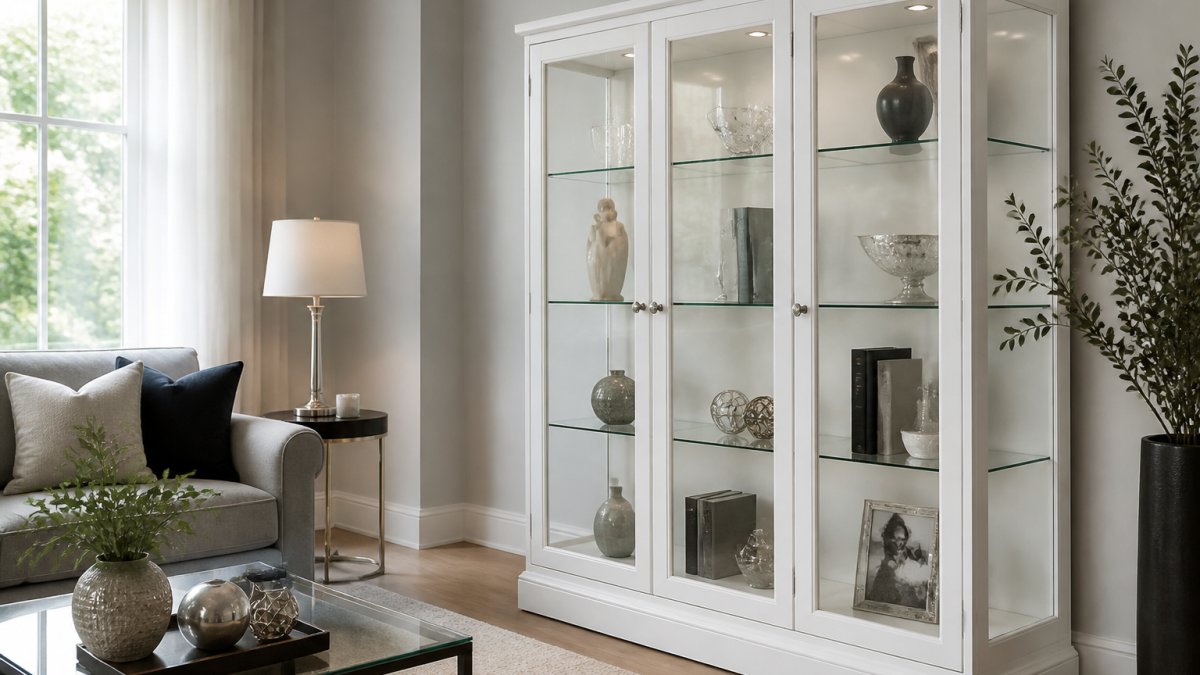
A childproof display cabinet combines security with style. It keeps valuables safe from children while displaying them beautifully.
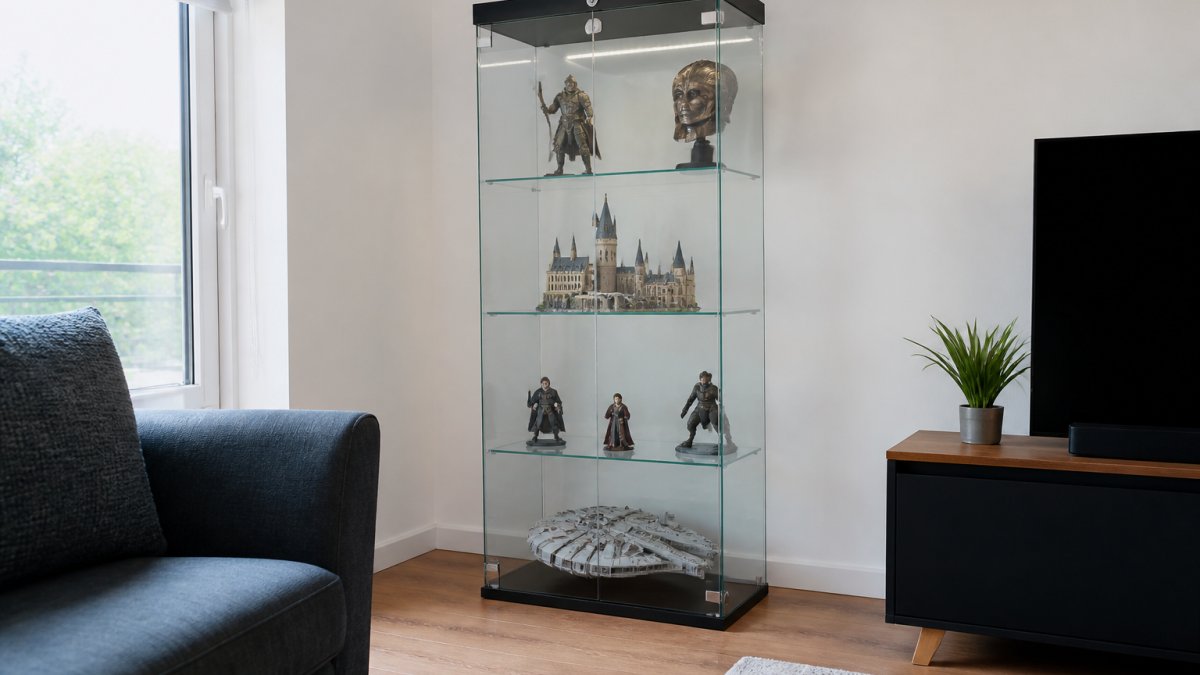
Key features to look for:
- Solid glass construction, tempered glass resists breaking
- Secure locking mechanism, tested and reliable
- Internal lighting, highlights your items
Consider where you'll place the cabinet. It should be:
- Away from furniture children can climb
- On a stable, level surface
- Visible but not in main traffic areas
We supply cabinets as flatpack for self-assembly or with a professional build service. Our cabinets feature secure locks and optional internal lighting.
Securing the Cabinet in Place
Once you've chosen your cabinet, secure it properly. This prevents tipping and adds security against theft.
Installation steps:
- Choose a level, stable surface
- Assemble the cabinet according to instructions
- Test the door lock multiple times
- Position the cabinet away from climbing hazards
- Secure the cabinet to the wall using provided brackets
- Use wall anchors appropriate for your wall type
- Check stability by gently pushing on the cabinet
- Verify the lock works smoothly after installation
Never place a display cabinet on an unstable surface or where children can climb on top of it.
If you're unsure about installation, a professional build service can assemble and secure your cabinet properly, ensuring it's safe and stable.
Supervision, Education, and Emergency Access
Storage does most of the work, but supervision and education close the gaps that locks cannot. The aim is not to ban children from rooms but to teach them what is safe to touch and what is not, in language that matches their age.
Supervision that actually works
Supervision is not the same as watching. It means shaping the environment so that a moment of inattention does not become an accident.
- Keep the highest-risk items in locked storage so supervision is a backup, not the only defence.
- Create one or two "yes" zones, such as a low shelf or basket of safe toys and books, so children have somewhere to explore without being told no.
- Position furniture so that chairs, stools and beds are not next to shelves or cabinets children could climb.
Age-specific education
Children understand risk differently at each stage, so the message needs to change with them.
Toddlers (under 3): words are less useful than barriers.
Preschoolers (3 to 6): they can follow simple rules and love to be helpers.
Primary-age children (7 to 12): they can understand value, fragility and consequences.
Teenagers: involve them in protecting the household's valuables.
A useful script for younger children: "This cabinet is locked because the things inside are breakable and special. You can look at them any time, and when you are older we can look together." It sets a boundary without making the items forbidden and therefore more interesting.
Digital and household access risks
Locks are only as good as the access details around them. Children are observant and often share what they see.
- Do not enter safe codes, alarm codes or smart-lock PINs in front of children.
- Keep spare keys out of sight and out of reach, and know how many exist.
- If you use smart locks, cameras or a video doorbell, set a separate user code for each adult and review who has access.
Emergency access plan
Every household with locked storage should have a simple plan for getting in quickly when it matters.
- Decide which locked items you might need in an emergency, such as medication, ID documents or a spare key.
- Keep those items in a container you can open quickly, and know exactly where the key or code is.
- Store a sealed copy of codes and key locations with a trusted adult outside the household.
- Tell one other adult in the household where the plan is kept.
- Review the plan when locks, codes or household members change.
Never keep the only key to a safe or cabinet inside the safe or cabinet itself. A locked-out adult in an emergency is a safety risk, not just an inconvenience.
When to review
Review your storage and access plan at each stage change: when a child starts crawling, when they learn to climb, when they start school and when they become a teenager. A setup that worked for a baby is rarely enough for a curious seven-year-old.
Marking and Identifying Personal Belongings
Marking your valuables serves multiple purposes.
Marking methods:
- Engrave your house number or postcode on items
- Use a UV pen to mark items invisibly (visible under UV light)
- Take photographs of valuable items for records
What to mark:
- Jewellery (engrave on the back)
- Electronics (mark on the back or bottom)
- Collectibles (mark discreetly if possible)
Marked items are less attractive to thieves.
Keep records of marked items in a locked cabinet or safe. Include photos, serial numbers, descriptions, and approximate values.
Protecting valuables from children requires a thoughtful approach.
Premium glass display cabinets with secure locks and optional lighting combine security with style, allowing you to showcase your valuables safely.
Check out our range of locked display cabinets.
Frequently Asked Questions
How can I keep valuables safe from young children at home?
Store valuables in locked cabinets, safes, or high shelves out of reach. Use display cabinets with secure locking mechanisms for jewellery, cash, and collectibles. Keep smaller items in closed drawers with childproof locks. Supervise access to rooms where valuables are stored, and teach children which items are not toys. For fragile items, combine height with barriers like locked glass cabinets to prevent both access and breakage.
What's the best way to protect fragile ornaments and collectibles from children?
A childproof display cabinet with a lock is the most effective solution. Glass cabinets with secure locking mechanisms keep breakables visible but inaccessible. Position cabinets on stable, immovable surfaces and away from furniture children can climb. Store the most fragile items on higher shelves within the cabinet. Combine this with supervision and clear boundaries about which items are off-limits. Document valuable items with photos and markings for insurance purposes.
Is a locked display cabinet or a home safe better for storing valuables?
Both serve different purposes. A display cabinet with lock works well for items you want to see and access regularly, such as jewellery or collectibles. A home safe or safety deposit vault is better for documents, cash, and items you access infrequently. Many households use both: a locked cabinet for display pieces and a hidden safe for documents and high-value items. Choose based on what you're storing, how often you need access, and whether the item benefits from being on display.
How do I childproof a glass display cabinet?
Ensure the cabinet has a reliable locking mechanism that children cannot force open or pick. Install the cabinet securely to the wall or floor so it cannot be tipped over. Keep keys hidden and out of reach, and never leave the cabinet unlocked when children are nearby. Store only age-appropriate items inside if the cabinet is in a shared living space. Position the cabinet away from climbing furniture and in areas where you can supervise access. Test the lock regularly to confirm it functions properly.