 comparison
Glass Cabinet vs Wood Display Case: Which Suits You?
Table of Contents
- Glass Cabinet vs Wood Display Case: Key Differences at a Glance
- Glass Display Cases: Transparency and Modern Appeal
- Wooden Display Cabinets: Warmth and Traditional Style
- How to Choose a Display Cabinet Size for Your Space
- Glass vs Acrylic Display Case: Material Comparison
- Display Cabinet With Lights and Lock: Security and Presentation Features
- Protection from Dust and Environmental Damage
- Use Cases: Home, Retail, and Collections
- Making Your Final Decision
- Frequently Asked Questions
Last Updated: October 9, 2026
Glass Cabinet vs Wood Display Case: Key Differences at a Glance
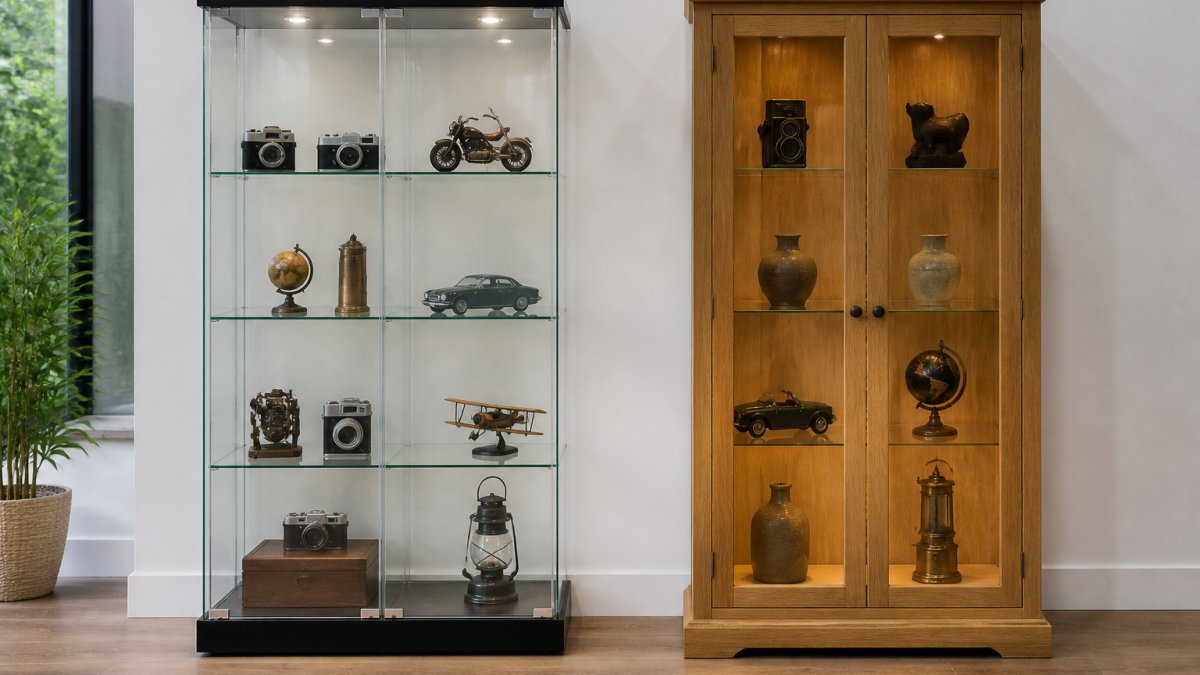
Choosing between a glass cabinet and a wood display case affects how your items look and how well they're protected. Glass offers transparency and modern style; wood provides warmth, traditional charm, and greater structural support for heavier items.
We help homeowners and small business owners face this choice daily. Some want sleek glass; others prefer classic wood; many find the best solution combines both.
Quick Comparison Table
| Feature | Glass Cabinet | Wood Display Case | Best For |
|---|---|---|---|
| Visibility | Complete transparency | Framed view, some obstruction | Showing off items vs. aesthetic integration |
| Modern Appeal | Contemporary, minimalist | Traditional, warm | Personal style preference |
| Dust Protection | Closed doors prevent dust | Open shelves collect dust | Valuable or delicate items |
| Weight Capacity | Moderate (glass limits load) | High (solid wood supports more) | Heavy collectibles |
| Maintenance | Glass cleaning required | Wood dusting and conditioning | Time commitment |
| Durability | Glass can break, panels replaceable | Wood lasts decades, repairable | Long-term investment |
| Security | Lockable options available | Lockable options available | Valuable items |
| Price Range | Variable by size and finish | Variable by material quality | Budget constraints |
Glass Display Cases: Transparency and Modern Appeal
Glass display cabinets excel at showing off what's inside. Complete transparency means light passes through unobstructed, so viewers see your collection clearly from any angle.
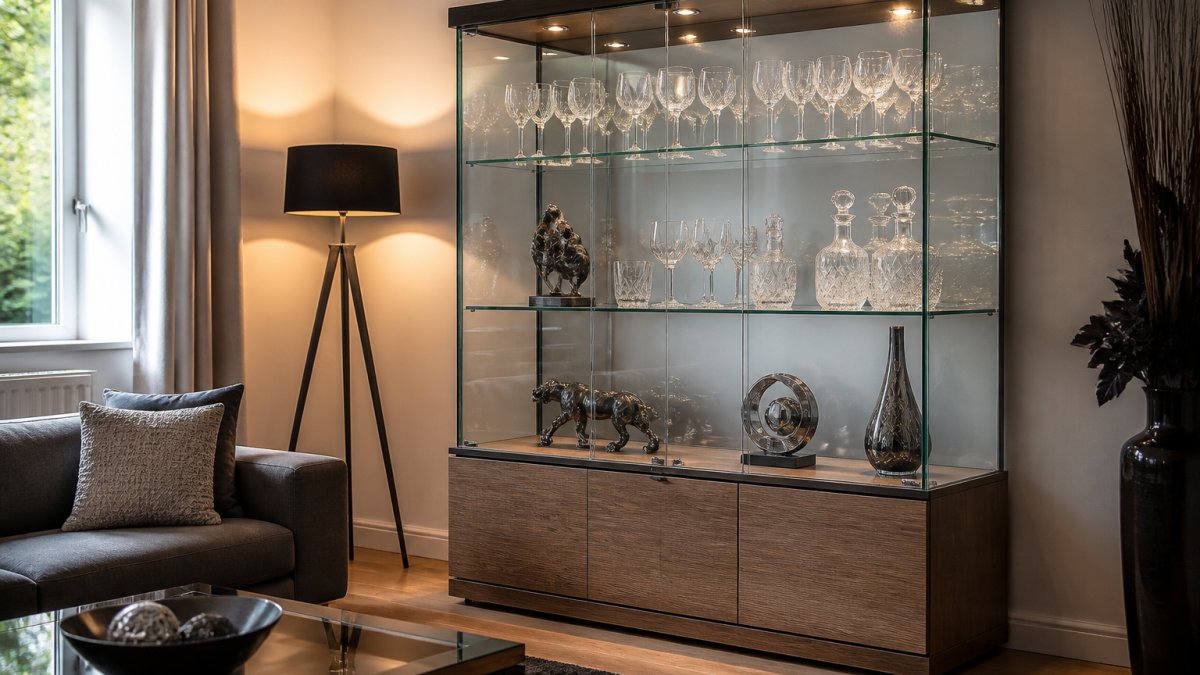
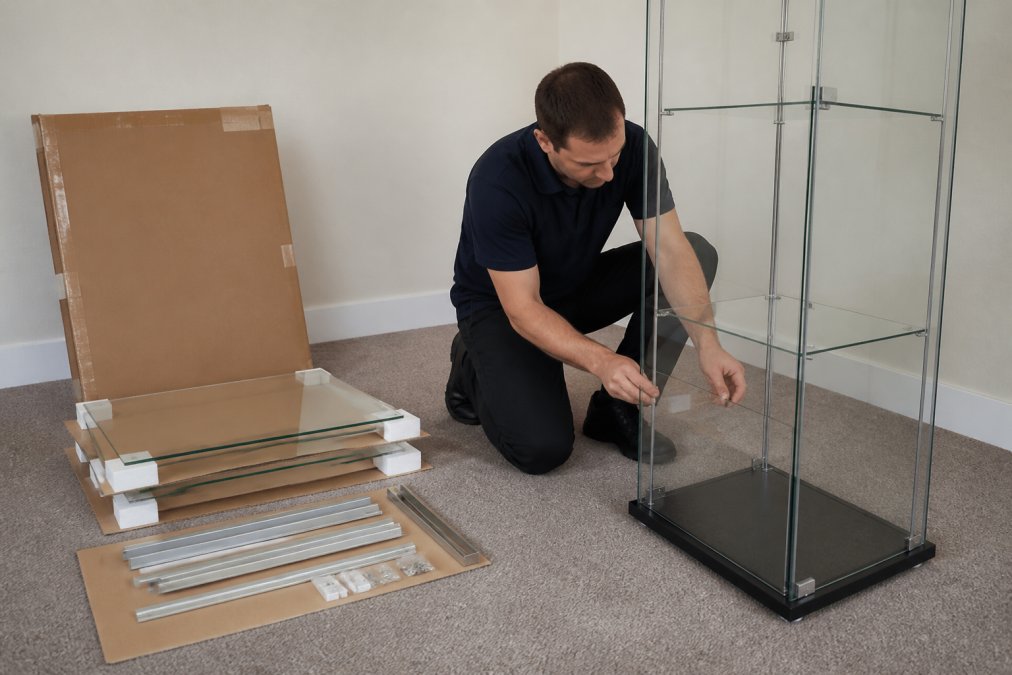
Modern glass cabinets come in two styles. Frameless designs glue glass panels at the edges for an almost invisible frame and maximum viewing area; framed designs use a timber or metal border for structural support and a defined edge.
Visual Presentation and Visibility
The main advantage of a glass cabinet is unobstructed sight lines: every item is visible without a wood frame blocking the view.
In retail, transparency is essential: customers need to see products clearly, and a glass display case signals professionalism and confidence in the merchandise.
At home, a glass cabinet becomes a focal point, elevating fine china, vintage glassware, or a prized collection from "stored" to "showcased."
Glass Durability and Maintenance
Glass is durable when treated properly but needs different care than wood.
Maintenance is straightforward but regular: fingerprints, dust, and smudges show on glass, so clean panels periodically with a soft microfibre cloth and glass cleaner.
If a panel cracks, most modern cabinets let you replace it individually rather than the whole unit, a real long-term advantage.
Wooden Display Cabinets: Warmth and Traditional Style
A wooden display cabinet brings warmth and character glass cannot. Wood's grain, colour variation, and tactile quality make a room feel lived-in, so if your décor leans traditional, transitional, or rustic, a wooden cabinet integrates seamlessly.
Wooden cabinets come in various timbers: oak brings pronounced grain and a golden hue, beech is lighter and subtler, pine feels casual and cottage-like, and walnut or mahogany offer deeper tones for a formal aesthetic.
Aesthetic Appeal and Home Decor Integration
The framed design means items are viewed through a timber border, creating visual boundaries that make a collection feel curated and intentional, like a picture frame.
Wooden cabinets also feel more substantial, anchoring a room. For high-value items or family heirlooms, wood's solid presence conveys security and permanence that glass sometimes cannot.
Wood Frame Durability and Repairability
Solid wood is built to last: a well-made cabinet can serve for decades, even generations, developing patina and character with age.
If a wooden cabinet is damaged, repair is often possible: scratches can be sanded and refinished, dents steamed out, broken shelves replaced.
Wood does require maintenance: finishes can fade in direct sunlight, and timber can dry out or absorb moisture depending on humidity.
How to Choose a Display Cabinet Size for Your Space
Size matters more than most people realise: too small looks lost, too large overwhelms. The right size balances your collection, room, and visual preferences.
Measuring Your Room and Available Space
Identify where the cabinet will go, against a wall, in a corner, or as a room divider, and measure the wall or floor area carefully.
Consider traffic flow: in a high-traffic area, size it so it doesn't obstruct movement; as a focal point, you can make it more prominent.
Think about surroundings: next to a doorway a tall cabinet may block sightlines, above a console table proportions must align, and flanked by chairs its width should feel balanced with the seating.
Matching Cabinet Dimensions to Your Collection
Before buying, count your items and assess their size.
Weight matters: glass shelves typically hold 15-25 kilograms per shelf depending on span, while wooden shelves handle more.
Consider future growth: active collectors should buy with room to expand, but a massive cabinet for a small collection makes items look sparse rather than curated.
Glass vs Acrylic Display Case: Material Comparison
When shopping for a glass cabinet, you may encounter acrylic. Both are transparent but not identical, and understanding the difference avoids a costly mistake.
Glass is heavier, more scratch-resistant, and optically clearer, feeling premium and lasting indefinitely.
For a display cabinet holding valuable items at home for years, glass is better: you pay for clarity, durability, and a finish that won't degrade.
Display Cabinet With Lights and Lock: Security and Presentation Features
The best display cabinets combine visibility with protection. Two features matter most: integrated lighting and secure locking.
Locking Mechanisms for Valuable Items
For jewellery, watches, coins, or other high-value items, a quality lock is non-negotiable.
Most locks are key-operated: turn a key to unlock, open the doors, and lock again when closed.
Look for locks that engage the door frame securely; one that only catches the handle is easier to pry open.
Construction affects security too: a solid wooden frame with reinforced corners is harder to break into than thin materials.
Check out →
Integrated Lighting for Optimal Display
Lighting transforms a display cabinet, highlighting items and creating depth.
Placement matters: top-mounted lights create dimension through shadows, side-mounted lights give an even, gallery-like effect, and bottom-mounted lights create dramatic but sometimes harsh uplighting.
Colour temperature affects appearance: warm white (2700K) flatters wood tones and warm-coloured items, while cool white (4000K-5000K) makes glass and metallics sparkle.
Dimming lets you adjust intensity by time of day or protect light-sensitive items.
Protection from Dust and Environmental Damage
A display cabinet's real purpose isn't just showing items but protecting them. Dust, humidity, light, and temperature fluctuations are the enemies of collectibles; a good cabinet mitigates these threats.
Closed vs Open Shelving and Dust Ingress
Open shelving displays items beautifully but offers zero dust protection: every time you walk past, dust settles on exposed surfaces.
A closed cabinet with solid doors and sealed edges keeps dust out.
Shelves should be solid or have very fine mesh if perforated.
For dust-attracting items like figurines, books, or glassware, a closed cabinet is essential and saves significant cleaning time.
UV Protection and Long-Term Item Preservation
Sunlight is one of the most damaging factors for collectibles: UV light fades colours, weakens textiles, and degrades plastics and dyes.
Standard glass offers minimal UV protection; UV-protective glazing filters most harmful rays while allowing visible light through.
Placement matters too: keep the cabinet away from direct sunlight, or use UV-protective window film or blinds during peak hours.
Use Cases: Home, Retail, and Collections
The right cabinet depends on use: a living room display has different requirements than a jewellery shop or museum-quality collectibles storage.
Home Display and Living Room Integration
At home, aesthetics matter as much as function: your cabinet should complement your décor and feel like an intentional design choice, not just storage.
For living rooms, wooden cabinets often work better because they integrate with existing furniture and colour schemes.
Home cabinets typically hold smaller collections, heirlooms, souvenirs, china, or decorative objects.
Retail and Professional Showcase Requirements
In retail, a glass cabinet is nearly always right: customers need to see products clearly, and a jewellery, watch, or collectibles retailer depends on transparency to drive sales.
Retail cabinets must be durable and easy to clean, since they're handled frequently and must look pristine.
Size matters in retail: large enough for a meaningful product selection but not so large it looks empty or cluttered.
Collectibles and High-Value Item Storage
For serious collectors, the cabinet is more than display furniture: it's security and preservation equipment.
For extremely valuable collections, some collectors choose cabinets with reinforced frames, multiple locks, and even motion sensors or alarms, often custom-built.
UV-protective glazing matters for long-term display, humidity control (silica gel or small dehumidifiers) protects against corrosion and mould, and temperature stability prevents rapid hot-cold swings.
Making Your Final Decision
When deciding on a glass cabinet vs wood display case, it comes down to three questions: What will you display? Where will it go?
If maximum visibility and modern appeal matter most, choose glass. If warmth, décor integration, and long-term repairability matter most, choose wood.
At Display Cabinets UK, we offer glass display cabinets with integrated locks and lighting, supplied flatpack for budget-conscious buyers or with a build service if assembly isn't your preference.
The decision between a glass cabinet and a wooden display case isn't about which is objectively "better", it's about which suits your specific needs. Display Cabinets UK can help you find the right cabinet with the features you need: secure locking mechanisms, integrated lighting, and construction that protects your items. Visit our website to explore our full range, or contact us for a custom quote if you have specific requirements.
Frequently Asked Questions
Which is better for a display case, acrylic or glass?
Glass offers superior clarity and scratch resistance compared to acrylic, making it the preferred choice for high-value collectibles. Acrylic is lighter, more affordable, and shatter-resistant, but yellows over time and scratches more easily. For long-term display of precious items, glass provides better optical quality and durability. Acrylic works well for temporary displays or items where impact resistance matters more than perfect clarity.
How do I choose the right size display cabinet for my collection?
Measure your available wall or floor space first, accounting for viewing distance and room traffic flow. Consider your collection's dimensions and growth potential, allowing extra shelf space for future acquisitions. Standard cabinet heights range from 1.2 metres to 2.1 metres, with widths from 0.6 metres to 1.2 metres. Account for door swing clearance and ensure the cabinet height doesn't dominate the room. Start by listing your largest item's dimensions, then add 10-15% extra capacity.
Are glass display cabinets safe for valuable collectibles?
Glass cabinets with locking mechanisms and tempered glass panels offer excellent protection for valuable items. Tempered glass is more impact-resistant than standard glass and shatters into small, harmless pieces if broken. Combined with a secure lock and optional internal lighting, glass cabinets provide visibility while protecting collectibles from dust and accidental contact. However, ensure the cabinet is properly anchored to prevent tipping, and consider insurance for items exceeding £5,000 in value.
Does a wooden display case protect items from dust better than glass?
Wooden display cabinets with glass doors and closed shelving offer excellent dust protection. The solid timber frame and enclosed design create a barrier against airborne particles, particularly beneficial for delicate items like glassware and ceramics. Glass-only cabinets with sealed edges also protect from dust, though wood-framed designs provide additional insulation from environmental fluctuations. Both styles outperform open shelving significantly. For maximum protection, choose cabinets with gasket seals around doors and adjustable shelves to accommodate your specific items.
What's the difference between a glass display cabinet with lights and a standard cabinet?
A display cabinet with integrated lights includes LED or halogen fixtures that illuminate items from inside, enhancing visual appeal and allowing evening display. The lighting system typically runs on low voltage for safety and energy efficiency. Locking mechanisms on these models provide security for valuable collectibles, preventing unauthorised access. Standard cabinets lack these features, requiring external lighting and offering no integrated security. Cabinets with both lights and locks are ideal for retail environments and high-value home collections, though they cost more than basic models.